



Is Low Fertility in High-Income Countries Here to Stay?





The brief’s key findings are:
- Fertility has fallen to record lows in high-income countries. Any effort to reverse this trend requires understanding its underlying causes.
- Economists often focus on financial factors, such as household income and the cost of raising children, but the evidence suggests broader changes are at work.
- “Shifting priorities” is an alternative, as options for meaningful child-free lives have grown along with changing norms for work, parenting, and gender roles.
- As priorities shift away from childrearing, it is not surprising that standard policies to modestly boost incomes or lower costs have only modest effects.
- A more effective approach may be to gradually realign societal norms around work and personal fulfillment in ways that better support parenthood.
Introduction
Across high-income countries, fertility rates have fallen to record lows. In exploring this phenomenon, the key policy questions are: 1) why is this trend occurring? and 2) what, if anything, can be done to reverse it? For example, the finances of pay-as-you-go programs like Social Security are adversely affected by falling fertility, with fewer workers paying for more retirees. Indeed, Social Security’s 75-year deficit is 18 percent higher as a share of payroll if fertility remains on its current lower track than if it follows the Social Security Administration’s more optimistic intermediate assumptions.1 This brief, based on a recent study, reviews the academic literature on falling fertility and its responsiveness to policy.2
The brief proceeds as follows. The first section documents the fertility declines across an array of high-income countries. The second section focuses on “why,” assessing several potential explanations. We consider standard economic reasoning focusing on prices and income and we also introduce our concept of “shifting priorities,” which incorporates the potential role of broader social forces. The third section looks at whether standard policy prescriptions can significantly influence the fertility rate. The final section concludes that we may need to go beyond such proposals to have an impact. Increasing the fertility rate in the short term will be difficult. Changing the landscape in which young women and couples chart their future life course in a way that makes childbearing a more desirable alternative is harder, but more likely to be successful in the longer term.
Declining Fertility
Although various measures of fertility exist, the one that most easily facilitates comparison across countries is known as the “Total Fertility Rate” (TFR). The TFR is the total number of children that a hypothetical woman would have over her childbearing life – often defined as ages 15-44 – given the fertility rates observed at different ages in a given year. So, the TFR for the United States in 2025 would add up the number of children the average 15-year-old would have in 2025, the average 16-year-old in 2025, all the way up to the average 44-year-old in 2025. The result is a single number that can be compared over time and across countries.
A common use of the TFR is to compare it to the “replacement fertility” level – about 2.1 – under which the total population remains stable. If fertility falls below this level, then a country’s population would eventually shrink unless supplemented by immigration. Figure 1 shows the TFR for six countries representing North America, Europe and East Asia.3 In all these countries, the TFR is below the replacement level today and has fallen at least 40 percent since 1955.
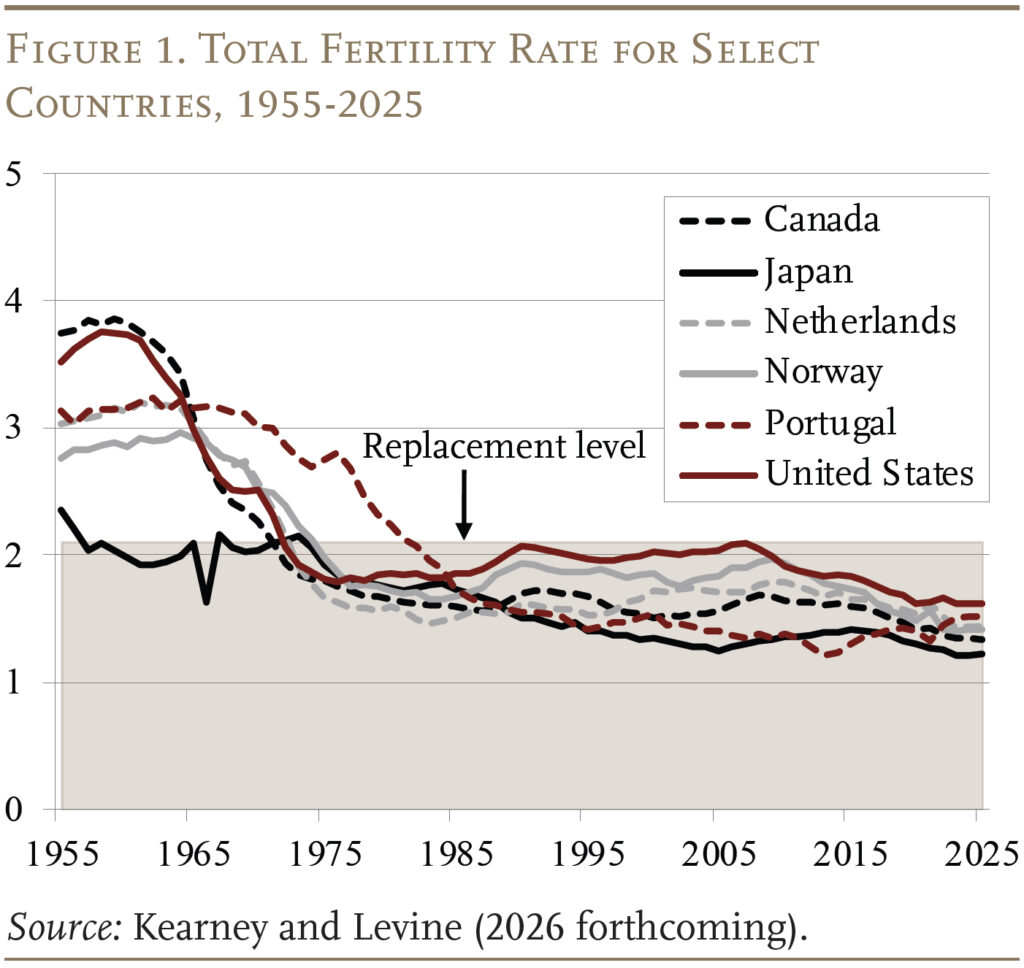
Although Figure 1 is compelling, it is worth considering another measure of fertility that addresses the issue of birth timing. Because TFR is constructed from the fertility rate for women of different ages alive at the same time, its use is sensitive to changes in the timing of births. For example, if the birth rate of 20-year-olds dropped substantially in a given year, the TFR would drop in that year too even if those women eventually had their children when they were 30. In short, if women are just delaying having kids, then the TFR will be misleading as a snapshot of the fertility rate.
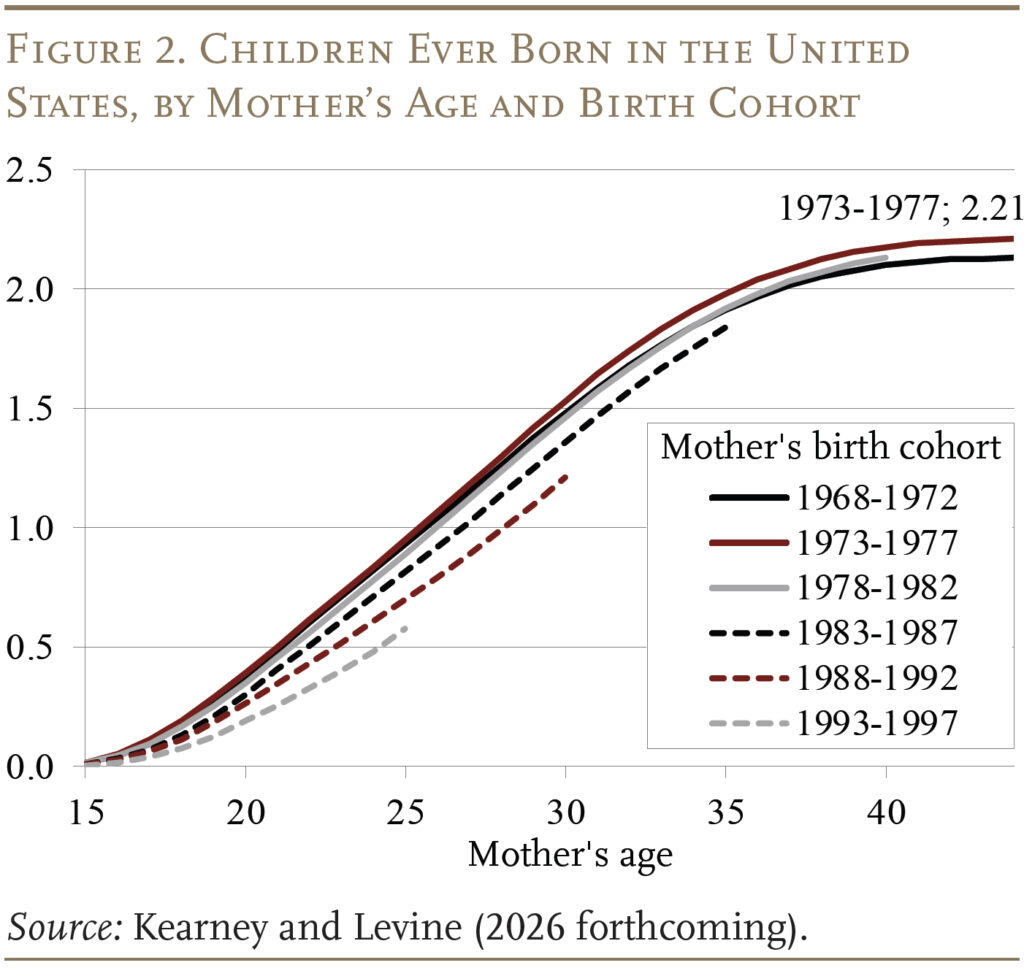
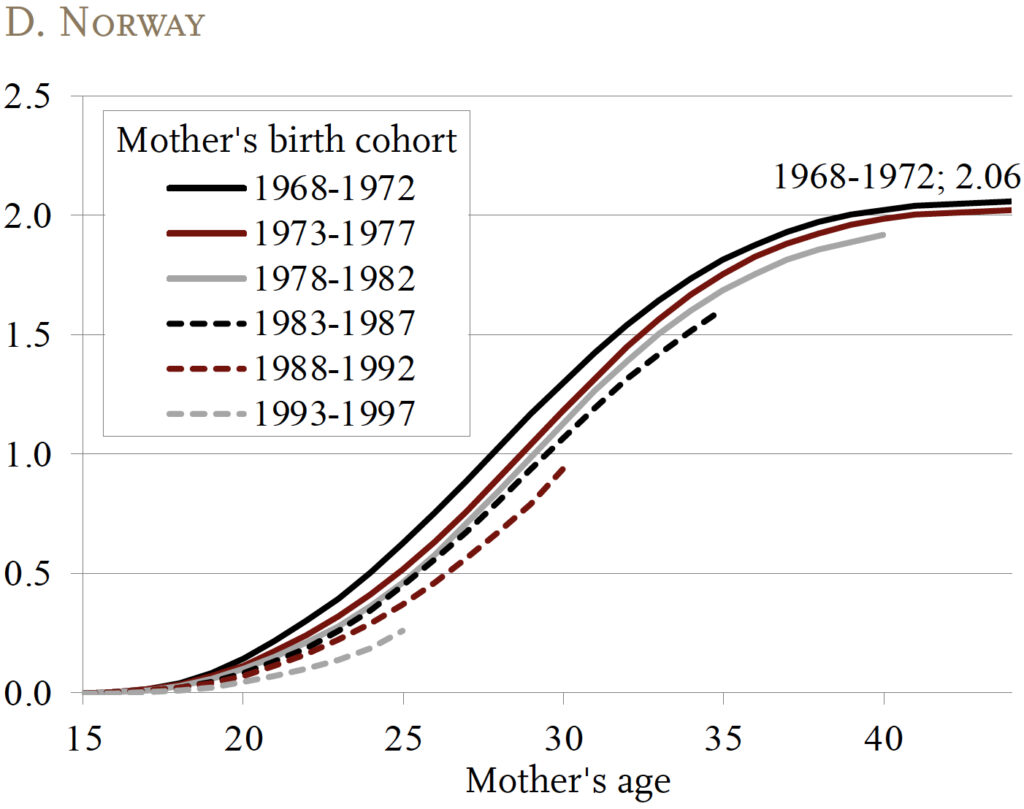
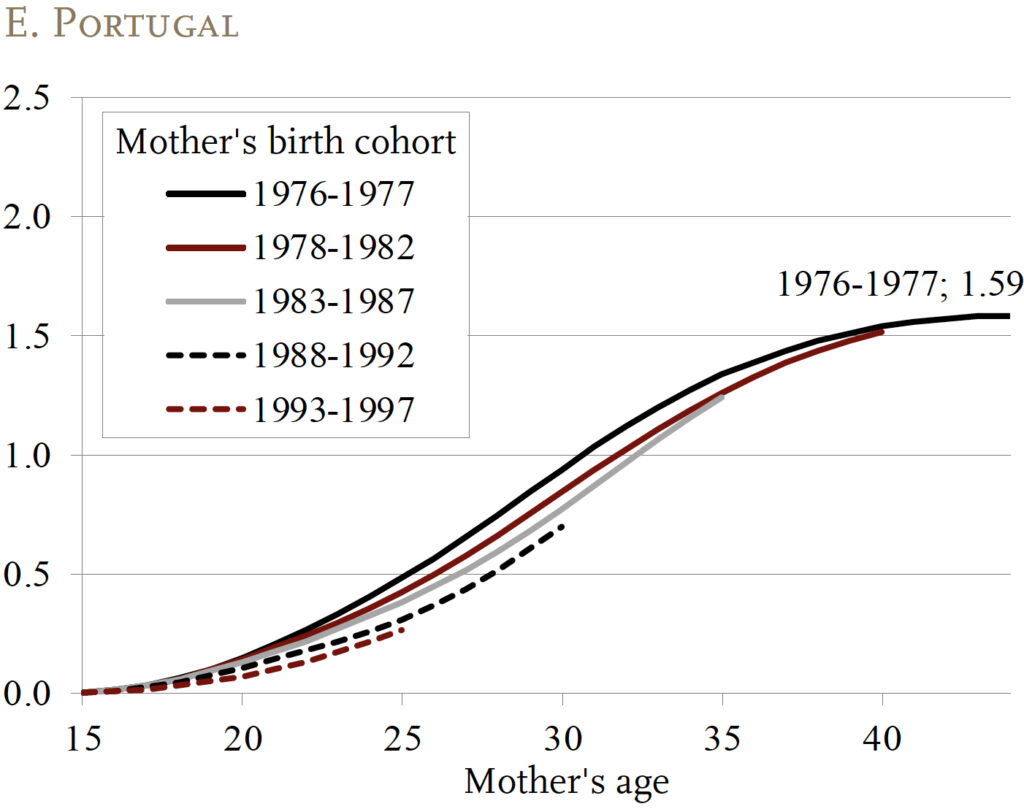
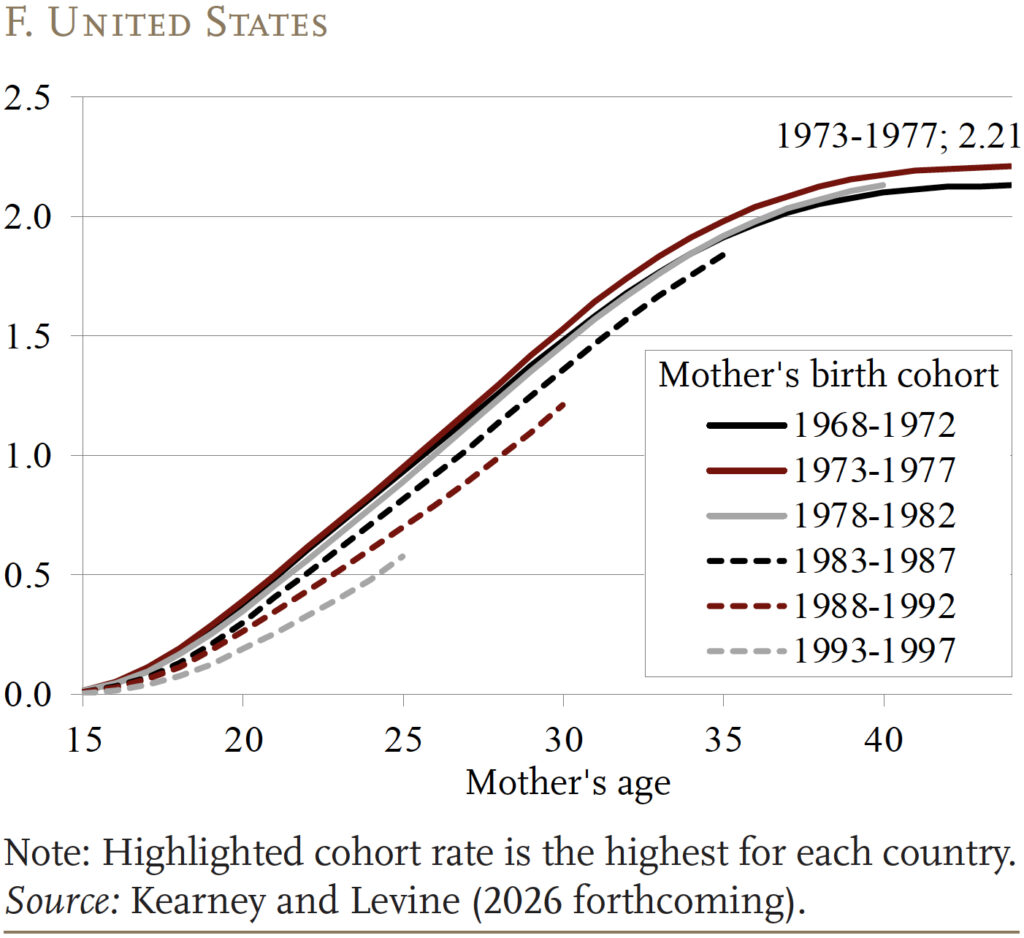
To examine whether this timing issue changes the picture, researchers use a measure called “Children Ever Born” (CEB). CEB follows cohorts of women as they age and tracks how many births they have experienced over their childbearing years. Thus, CEB would not be impacted by a change in the timing of births, providing a more accurate picture of the fertility rate. The drawback to CEB is that, for younger cohorts, the data needed to calculate it are always incomplete – for example, Millennials born in 1995 won’t be age 44 until 2039.
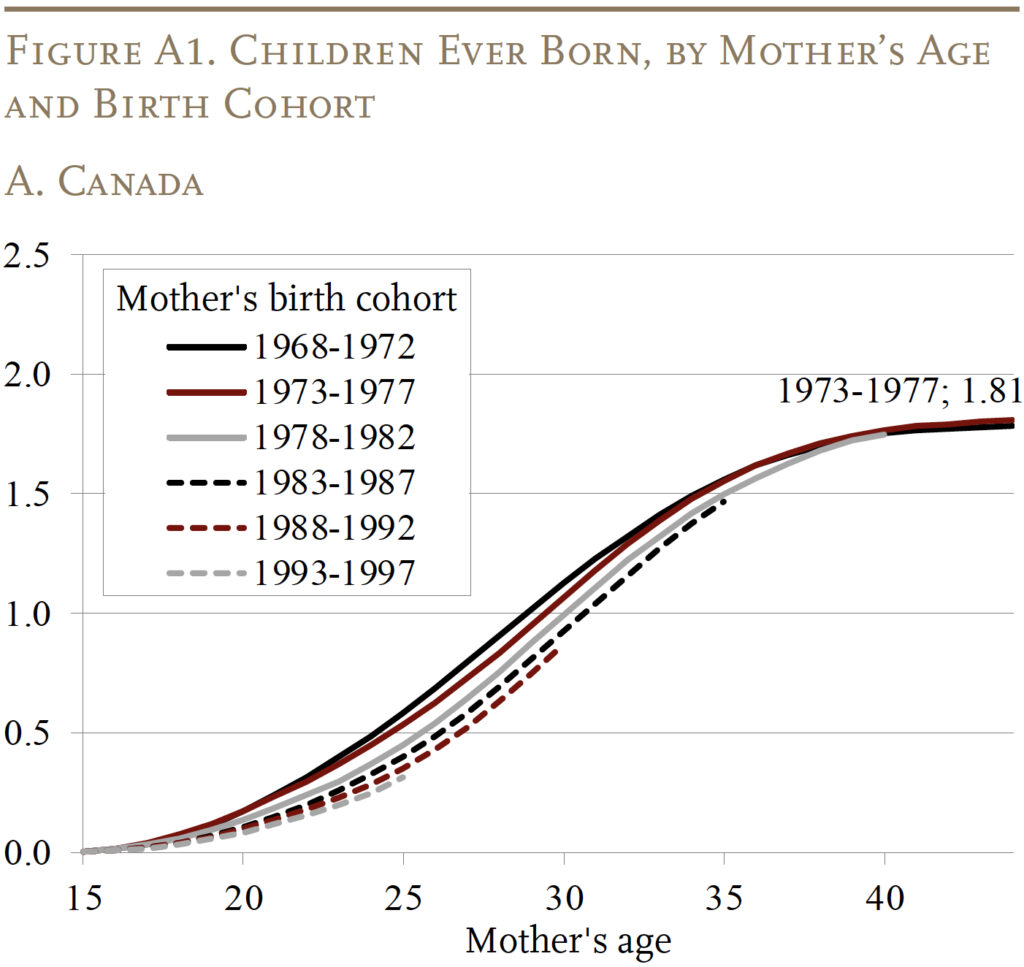
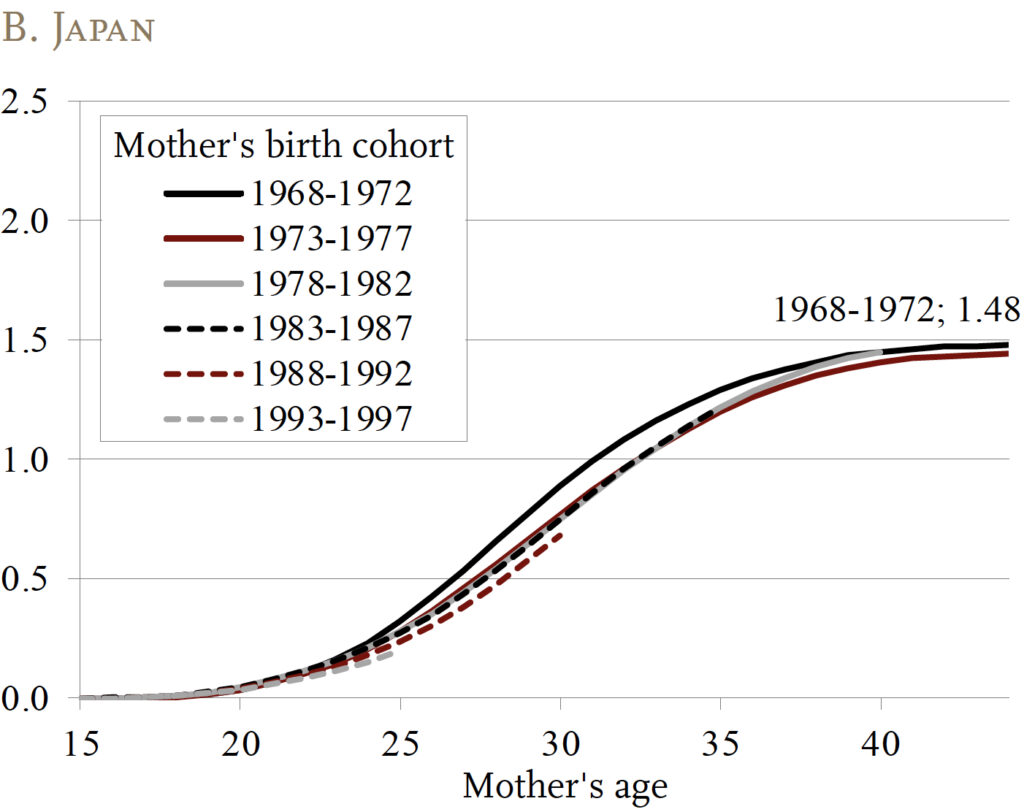
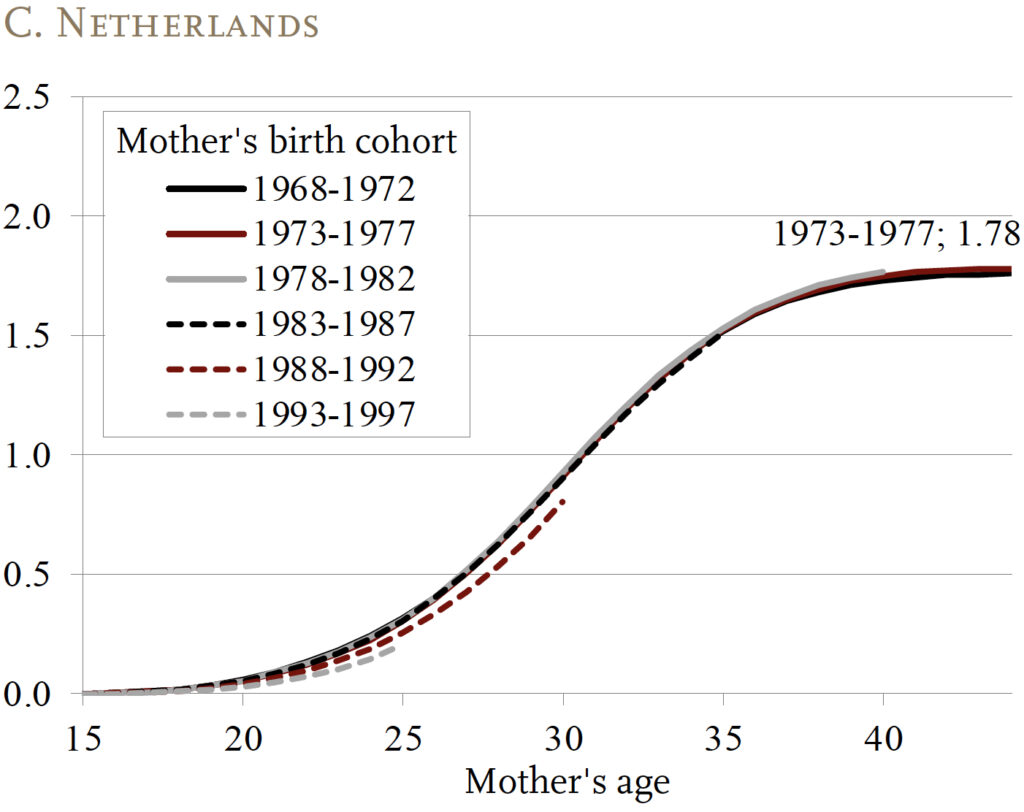
Still, tracking changes across cohorts over their childbearing years can yield useful insights even if their fertility is not yet complete. Figure 2 provides such data for the United States, tracking birth cohorts categorized into five-year intervals (data for the other five countries listed in Figure 1 are presented in the Appendix). The pattern across cohorts is clear. More recent cohorts continue to fall further behind the age-specific completed fertility observed for earlier cohorts. While it remains possible that they will eventually catch up, the extent of the gaps is sufficiently large that it is difficult to imagine that it will occur (particularly given reduced probabilities of becoming pregnant at older ages). This figure demonstrates that the main mechanical factor contributing to falling fertility is the falling trajectory of births by cohort, not changes in fertility at a point in time.
Possible Explanations for the Decline
Traditionally, economists have focused on financial considerations in evaluating the factors that influence fertility. That would include an individual’s income along with the “prices,” broadly defined, associated with having children and other alternatives. Those prices may include factors like childcare costs, housing costs, and parental leave policies, among others.
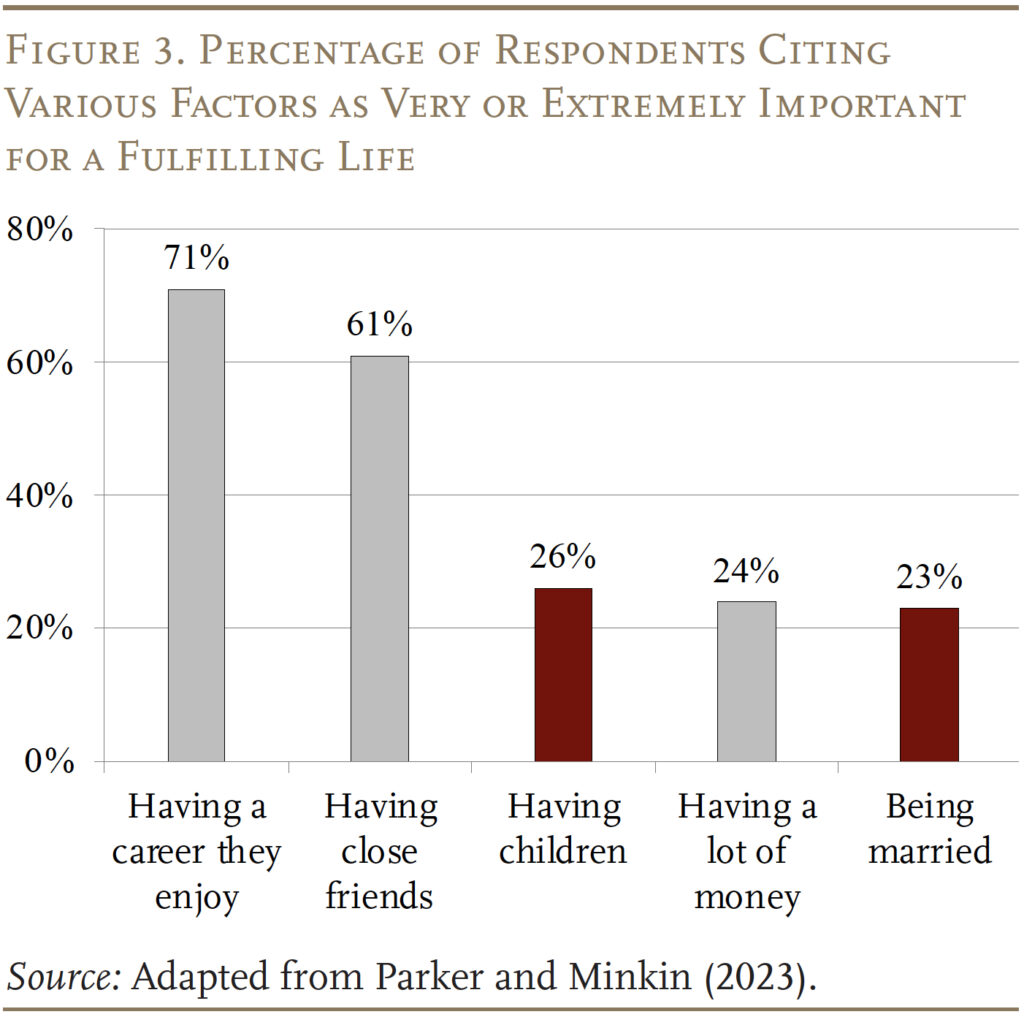
There are reasons to believe, though, that these explanations may be insufficient to explain the changes in fertility observed recently. For example, Figure 3 reports the results of a public opinion poll of all adults conducted in 2023 by the Pew Research Center asking what contributes to a fulfilling life. It finds that, in the United States, respondents were far more likely to mention the value of their career and having close friends than having children (or being married). It could be that changes in prices and income may affect those responses, but it seems more plausible that it may reflect broader societal changes.
To build a broader explanation, we recognize that decisions about having children don’t happen in a vacuum. People are influenced not only by prices and income, but also by the world they live in and the choices and social norms that characterize that current world. We propose that the broad-based decline in fertility across the industrialized world is best understood as a widespread de-prioritization of parenthood in people’s adult lives. We refer to this phenomenon as shifting priorities, reflecting a deep transformation in how more recent cohorts of young adults are choosing to orient their lives.
For instance, today’s young adults live in environments offering far more options for meaningful, satisfying lives outside of family formation. Travel is more accessible. Leisure and entertainment industries have exploded. Digital technology offers endless forms of connection, creativity, and escape. Careers have become central to many people’s identity and purpose. Self-development, fitness, hobbies, online communities, and personal experiences have become valued pursuits in their own right. As we discuss below, alternative lifestyles have also become not just more accessible and available, but also more socially acceptable.
When appealing alternatives to parenthood expand, the opportunity cost of having children rises. This measure doesn’t just refer to the financial costs of having children, but to everything a person might have to give up: free time, spontaneity, career ambitions, or personal exploration. Parenthood can still be deeply meaningful, but it now competes with many other sources of fulfillment. This concept is related to the way economists have always thought about the “price” of having children, but it is a much broader concept.
Greater availability of choices is only one part of the story. Social norms have also evolved alongside an expanding set of socially acceptable non-child alternatives in a way that likely affects the way young adults prioritize different pursuits. Norms have changed in a variety of dimensions.
Consider evolving norms around work. Work and career pursuits have arguably become much more central to people’s lives in recent decades. Working outside the home has also become the norm among women, including women with children. In the past, there was a negative relationship between the share of women in a country who participated in the labor force and a country’s fertility rate. That is no longer true. As Figure 4 highlights for the OECD countries, today it is not the case that countries with higher female labor force participation rates have relatively lower fertility rates. This finding implies that any link between female labor force participation and fertility today is more nuanced than women simply choosing one versus the other.
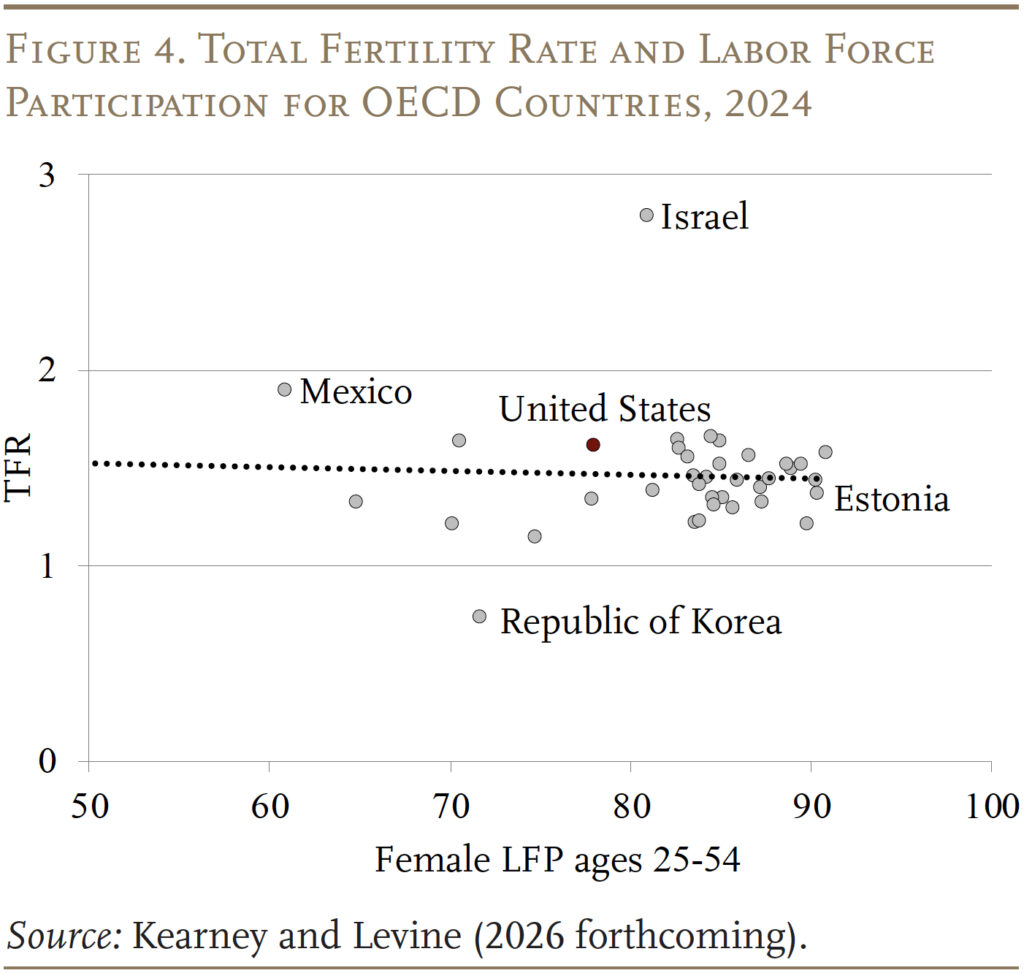
Today, labor force participation – meaning, working for pay or having a career – is the default for most women in high-income countries, so the real decision is not whether to work or have children, it’s whether to work and have children (even if some women temporarily step out of the workforce to take care of children full-time for a period). In that framework, the decision to have a child or children could be affected by how hard it is to juggle both work and parenting. And this conflict is considerable.
Social norms around parenting may have also played a role. Parenting has become more resource intensive in many high-income countries as documented in time-use studies.4 The social expectation of more parental time and investment in children makes the choice to have children more difficult. Parenting in recent decades might seem more stressful than it was in the 1970s and 1980s, and it is more likely to conflict with work expectations or goals (especially for women).
Norms surrounding gender roles may also matter. In some countries women’s role in the labor force has grown faster than men’s role in childcare, leaving women to shoulder the extra burden.5 Indeed, one study found that couples were likely to have children only if both agreed about having a baby and that in low-fertility countries it was often women who did not want another child.6
Social interaction amplifies these processes. If those around you are having kids, then one might perceive having children as a priority.7 However, if those around you are childless and pursuing child-free activities, having kids could be socially costly. One recent paper finds that workers who are exposed to reduced fertility among their co-workers do have fewer births themselves.8 If more people are childless, then these sorts of peer effects could be amplified.
Evidence also exists that larger social forces have contributed to lower fertility. For example, media programming ranging from telenovelas in Brazil that depict small families to U.S. reality programming that highlight the difficulties of teen pregnancy have been causally linked to reduced fertility.9 Simultaneously, the developed world has experienced a large decline in religiosity. Indeed, a recent study found that between 2010 and 2020, religious identity dropped at least 5 percentage points in 35 countries.10 While more research is needed to find a causal link between religion and fertility, it is true that religious people have more kids. Plus, some studies have found a positive and causal link between papal statements and fertility, suggesting that when religious leaders urge people to have more kids, the people listen.
Can Standard Policy Prescriptions Increase Fertility?
Given the consequences of low fertility for economic growth and social programs like Social Security, it makes sense that policymakers may seek to influence the fertility rate. Are there policies that can effectively accomplish that goal? Common proposals to increase fertility include some form of cash payment (e.g., tax credits or baby bonuses), policies to facilitate work and family (e.g., childcare subsidies or parental leave), or policies to provide affordable housing. For the most part, such policies are unlikely to have a large effect on fertility (although they still may accomplish other meaningful social goals).
Consider, for instance, cash payments tied to giving birth. One study conducted in 2020 reviewed two dozen academic articles on the impact of government efforts to promote fertility with such income supplements.11 The results suggest that payments that increase a household’s budget by 10 percent would increase birth rates by between 0.5 and 4.1 percent.
But boosting fertility by a meaningful amount would be very expensive. Consider that U.S. median household income is around $85,000. The 2020 paper suggests that giving households with women of childbearing age $8,500 might increase the U.S. TFR by at most 0.07 – from the current level of 1.62 to 1.69 births per woman. Since tens of millions of households would likely receive these payments, the cost would be hundreds of billions for a relatively small increase in fertility. Or, as the author himself put it: “pro-natal incentives do work: more money does yield more babies… but it takes a lot of money. Truth be told, trying to boost birth rates … purely through cash incentives is prohibitively costly.”
Pundits often suggest policies that make it easier for women to have both a career and family could boost fertility. On paid leave, the answer is pretty clear – it doesn’t seem to increase fertility. Studies exploiting paid leave expansions in California, Norway, Sweden, and Austria all found no effect on completed fertility.12 In fact, Figure 5 – based on a cross-country study – shows the correlation between several child-friendly policies and fertility and finds that more generous paid leave policies, if anything, have a negative correlation to birth rates.
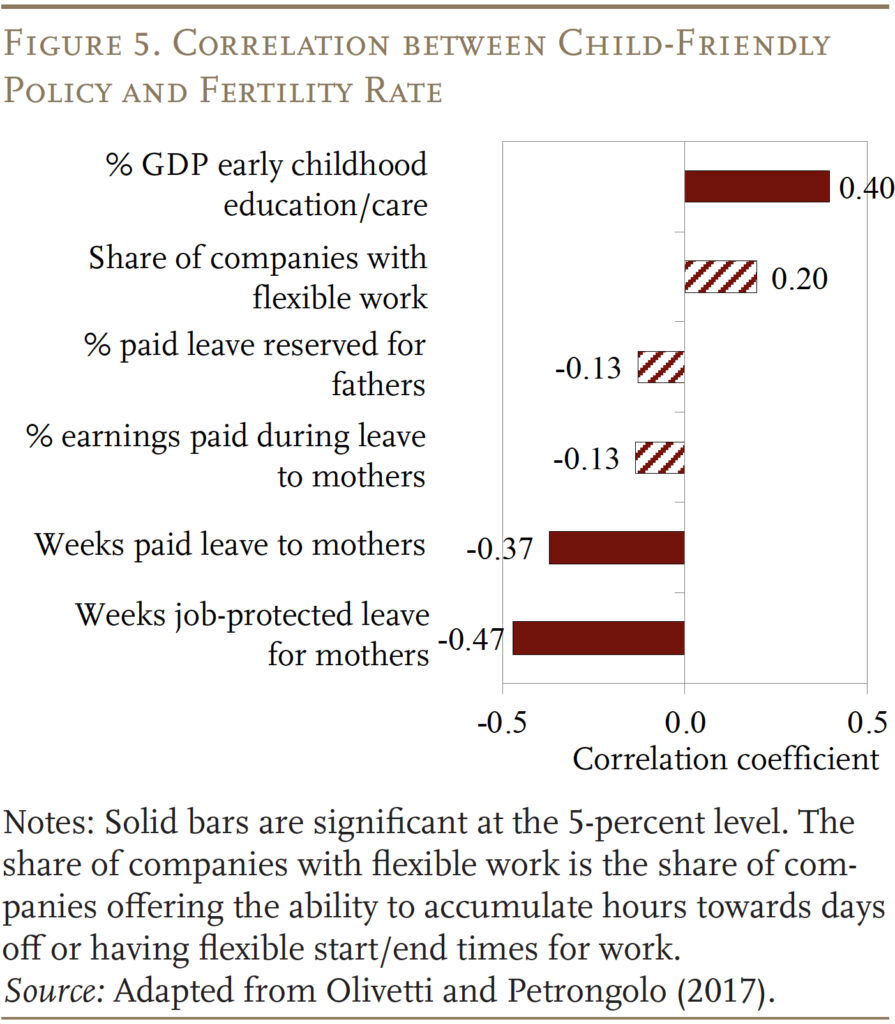
On the childcare side, Figure 5 shows that the result is somewhat more promising, with a significant positive correlation between spending on early childhood education/care and fertility.13 The problem? The study that Figure 5 is based on implies that for the United States to slightly increase TFR – from 1.62 to just 1.64 – it would cost $280 billion. So, again, while policy options exist, their cost is likely prohibitive.
Perhaps there is scope for meaningful change on the housing front. But this approach likely won’t be as straightforward as just making housing less expensive. Past research shows that a $10,000 increase in home prices in the 2000s led to a 5-percent increase in fertility among homeowners, but a 2.4 percent decrease among non-homeowners.14 Housing prices would have to fall considerably for young adults, who are less likely to own a home, to have more children.
However, increasing access to homeownership – perhaps through expanded access to mortgage credit – might have bigger effects. Some empirical support exists for the idea that expanding access to housing credit and thereby homeownership could lead to increased fertility. One analysis found that mortgage market deregulation in the United States – which made it easier to borrow to afford larger houses – increased homeownership and fertility.15 Researchers studying the impact of a housing credit lottery in Brazil found that lottery participants who won access to housing credit in their 20s had higher completed fertility as compared to lottery participants who didn’t win access to housing credit until their 30s.16 Another study examined the introduction of the modern mortgage in the United States through government programs (most notably the G.I. Bill) and found that these programs led to earlier marriage and higher fertility, contributing to the U.S. Baby Boom.17
Conclusion
Economists’ go-to solutions aren’t addressing the fundamental issues that are causing the decline in fertility. The focus on changes in prices and income often is directed at explaining period-specific changes in fertility and that isn’t the nature of the change in fertility that is taking place. Any viable explanation needs to explain changes in behavior across cohorts. And price changes that occur in the middle of a woman’s childbearing years are unlikely to have a large impact because she may already be locked into certain life choices.
Any efforts to increase fertility among future cohorts of young adults will only have an impact if they meaningfully alter the environment facing women and their partners as they set out on their life plans. Perhaps large, persistent changes in prices and income would affect forward thinking, but more generally, parenting would need to be viewed as a more desirable pursuit. That goal will likely require changing the broader environment in which people are making choices about how to spend their time, money, and efforts, and specifically, deciding on life courses that prioritize (or not) starting a family versus other attractive pursuits.
In short, addressing fertility decline demands sustained efforts to realign social norms, institutions, and expectations so that parenthood is more compatible with modern aspirations around work, identity, and fulfillment. We should not expect quick fixes or short-run responses, but perhaps we can look forward to gradual changes that unfold across cohorts. For now, further research and experimentation with alternative policies can help guide our search for successful interventions.
References
Akerlof, George A. 1997. “Social Distance and Social Decisions.” Econometrica 65 (5): 1005–27.
Bailey, Martha, Tanya Byker, Elena Patel, and Shanthi Ramnath. 2025. “The Long-Run Effects of California’s Paid Family Leave Act on Women’s Careers and Childbearing: New Evidence from a Regression Discontinuity Design and U.S. Tax Data.” American Economic Journal: Economic Policy 17(1): 401-431.
Bianchi, Suzanne M. 2011. “Family Change and Time Allocation in American Families.” The ANNALS of the American Academy of Political and Social Science 638(1): 21-44.
Chong, Alberto and Eliana La Ferrara. 2009. “Television and Divorce: Evidence from Brazilian ‘Novelas.’” Journal of the European Economic Association 7(2/3): 458-468.
Dahl, Gordon B., Katrine V. Løken, Magne Mogstad, and Kari Vea Salvanes. 2016. “What Is the Case for Paid Maternity Leave?” The Review of Economics and Statistics 98(4): 655-670.
Daysal, N. Meltem, Michael Lovenheim, Nikolaj Siersbæk, and David N. Wasser. 2021. “Home Prices, Fertility, and Early-Life Health Outcomes.” Journal of Public Economics 198(June):104366.
De Paola, Maria, Roberto Nisticò, and Vincenzo Scoppa. 2024. “Workplace Peer Effects in Fertility Decisions.” Working Paper No. 714. Naples, Italy: Center for Studies in Economics and Finance.
Dettling, Lisa J. and Melissa Schettini Kearney. 2025. “Did the Modern Mortgage Set the Stage for the U.S. Baby Boom?” Working Paper 33446. Cambridge, MA: National Bureau of Economic Research.
Dettling, Lisa J. and Melissa S. Kearney. 2014. “House Prices and Birth Rates: The Impact of the Real Estate Market on the Decision to Have a Baby.” Journal of Public Economics 110(February): 82-100.
Doepke, Matthias and Fabian Kindermann. 2019. “Bargaining over Babies: Theory, Evidence, and Policy Implications.” The American Economic Review 109(9): 3264-3306.
Doepke, Matthias and Fabrizio Zilibotti. 2019. Love, Money, and Parenting: How Economics Explains the Way We Raise Our Kids. Princeton, NJ: Princeton University Press.
Dotti Sani, Giulia M. and Judith Treas. 2016. “Educational Gradients in Parents’ Child-Care Time Across Countries, 1965–2012.” Journal of Marriage and Family 78(4): 1083-1096.
Duvander, Ann-Zofie and Gunnar Andersson. 2006. “Gender Equality and Fertility in Sweden.” Marriage & Family Review 39(1-2): 121-142.
Fazio, Dimas, Tarun Ramadorai, Janis Skrastins, and Bernardus Ferdinandus Nazar Van Doornik. 2024. “Housing and Fertility.” FEB-RN Research Paper No. 111/2025. Aalborg, Denmark: Aalborg University, Finance, Economics & Banking (FEB-RN) Research.
Goldin, Claudia. 2024. “Babies and the Macroeconomy.” Working Paper 33311. Cambridge, MA: National Bureau of Economic Research.
Hackett, Conrad. 2025. “How Religion Declines Around the World.” Washington, DC: Pew Research Center.
Havnes, Tarjei and Magne Mogstad. 2011. “No Child Left Behind: Subsidized Child Care and Children’s Long-Run Outcomes.” American Economic Journal: Economic Policy 3(2): 97-129.
Kearney, Melissa Schettini and Phillip B. Levine. 2026 (forthcoming). “Why Is Fertility So Low in High Income Countries?” Journal of Economic Literature. [Also available as National Bureau of Economic Research Working Paper 33989.]
Kearney, Melissa S. and Phillip B. Levine. 2015. “Media Influences on Social Outcomes: The Impact of MTV’s 16 and Pregnant on Teen Childbearing.” American Economic Review 105(12): 3597-3632.
Kleven, Henrik, Camille Landais, and Gabriel Leite-Mariante. 2024. “The Child Penalty Atlas.” The Review of Economic Studies 92(5): 3174-3207.
Kleven, Henrik, Camille Landais, Johanna Posch, Andreas Steinhauer, and Josef Zweimüller. 2024. “Do Family Policies Reduce Gender Inequality? Evidence from 60 Years of Policy Experimentation.” American Economic Journal: Economic Policy 16(2): 110-149.
La Ferrara, Eliana, Alberto Chong, and Suzanne Duryea. 2012. “Soap Operas and Fertility: Evidence from Brazil.” American Economic Journal: Applied Economics 4(4): 1-31.
Lovenheim, Michael F. and Kevin J. Mumford. 2013. “Do Family Wealth Shocks Affect Fertility Choices? Evidence from the Housing Market.” The Review of Economics and Statistics 95(2): 464-475.
Olivetti, Claudia and Barbara Petrongolo. 2017. “The Economic Consequences of Family Policies: Lessons from a Century of Legislation in High-Income Countries.” Journal of Economic Perspectives 31(1): 205-230.
Parker, Kim and Rachel Minkin. 2023. “Public Has Mixed Views on the Modern American Family.” Blog Post (September 14). Washington, DC: Pew Research Center.
Ramey, Garey and Valerie A. Ramey. 2010. “The Rug Rat Race.” Brookings Papers on Economic Activity 41(1): 129-199.
Stone, Lyman. 2020. “Pro-Natal Policies Work, But They Come With a Hefty Price Tag.” Research Brief. Charlottesville, VA: Institute for Family Studies.
United Nations. 2025. “World Fertility 2024.” UN DESA/POP/2024/TR/NO.11. New York, NY: Department of Economic and Social Affairs, Population Division.
U.S. Social Security Administration. 2025. The Annual Reports of the Board of Trustees of the Federal Old-Age and Survivors Insurance and Federal Disability Insurance Trust Funds. Washington, DC: U.S. Government Printing Office.
Appendix
Endnotes
- U.S. Social Security Administration (2025). ↩︎
- Kearney and Levine (2026 forthcoming). ↩︎
- Just two countries in the G20 and one in the OECD have fertility above the replacement rate; see United Nations (2025). ↩︎
- See Bianchi (2011), Ramey and Ramey (2010), Dotti Sani and Treas (2016), and Doepke and Zilibotti (2019), among others, for documentation. ↩︎
- See Goldin (2024). ↩︎
- See Doepke and Kindermann (2019). ↩︎
- See Akerlof (1997). ↩︎
- De Paola, Nisticò, and Scoppa (2024). ↩︎
- For the telenovela paper, see La Ferrara, Chong, and Duryea (2012) and Chong and La Ferrara (2009), and for the paper on “16 and Pregnant” see Kearney and Levine (2015). ↩︎
- Hackett (2025). ↩︎
- Stone (2020). ↩︎
- See Bailey et al. (2025), Dahl et al. (2016), Duvander and Andersson (2006), and Kleven et al. (2024) for analyses of California, Norway, Sweden, and Austria, respectively. These studies contain some evidence of a transitory effect on fertility. ↩︎
- Another study – Havnes and Mogstad (2011) – explored the staggered rollout of subsidized childcare in Norway and found a modest increase in births to women who had already had a first child. ↩︎
- Dettling and Kearney (2014). Lovenheim and Mumford (2013) and Daysal et al. (2021) find similar increases in fertility for homeowners in response to rising prices in the United States and Denmark, respectively. ↩︎
- Kleven, Landais, and Leite-Mariante (2024). ↩︎
- Fazio et al. (2024). ↩︎
- Dettling and Kearney (2025). ↩︎



Schettini Kearney, Melissa and Phillip B. Levine. 2026. "Is Low Fertility in High-Income Countries Here to Stay?" Issue in Brief 26-5. Chestnut Hill, MA: Center for Retirement Research at Boston College.