


Policy Uncertainty Is Muddling Retirement Planning – and Advisors Are Just as Confused






Alicia H. Munnell is a columnist for MarketWatch and senior advisor of the Center for Retirement Research at Boston College.
Market optimism may be masking deep retirement risks.
Planning for retirement has always been hard, but when government policy is unpredictable, it makes it even more challenging. For example, changes to Social Security and Medicare can put basic security at risk; changes to the tax system can scramble a household’s finances; and ballooning government debt can increase interest rates and slow the economy.
A 2025 survey conducted by Greenwald Research of 1,443 individuals ages 45-79 with over $100,000 in investable assets revealed that older Americans were keenly aware of the increase in policy uncertainty and took defensive responses. Specifically, 21 percent of the unretired respondents in the sample decided to postpone their retirements. On the financial side, 28 percent of the entire group increased their emergency fund, and 33 percent shifted to more conservative investments.
One group that could help older Americans cope with the heightened level of policy risk is financial advisors. My colleague Gal Wettstein and I partnered with Jackson National Life Insurance to commission a companion survey to see what financial advisors thought about the uptick in policy risk between January and July 2025 and what advice they were providing their older clients.
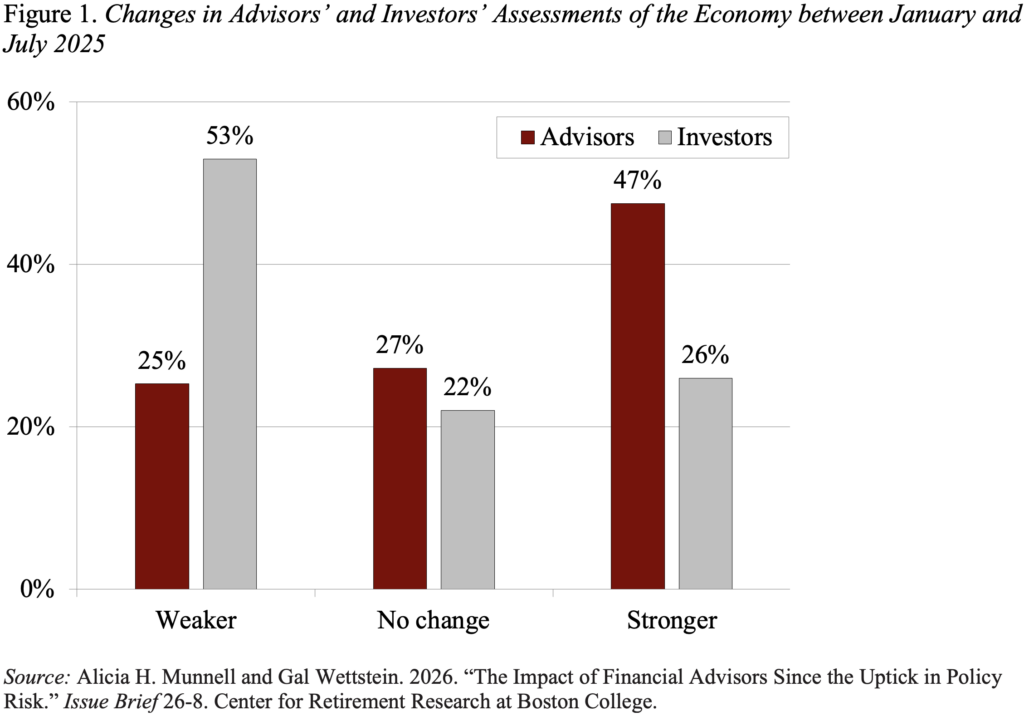
The results showed that financial advisors were generally optimistic about the economy: 47 percent said it had strengthened since the start of 2025, and only 25 percent said it had weakened (see Figure 1). These views were much more positive than those of investors generally.
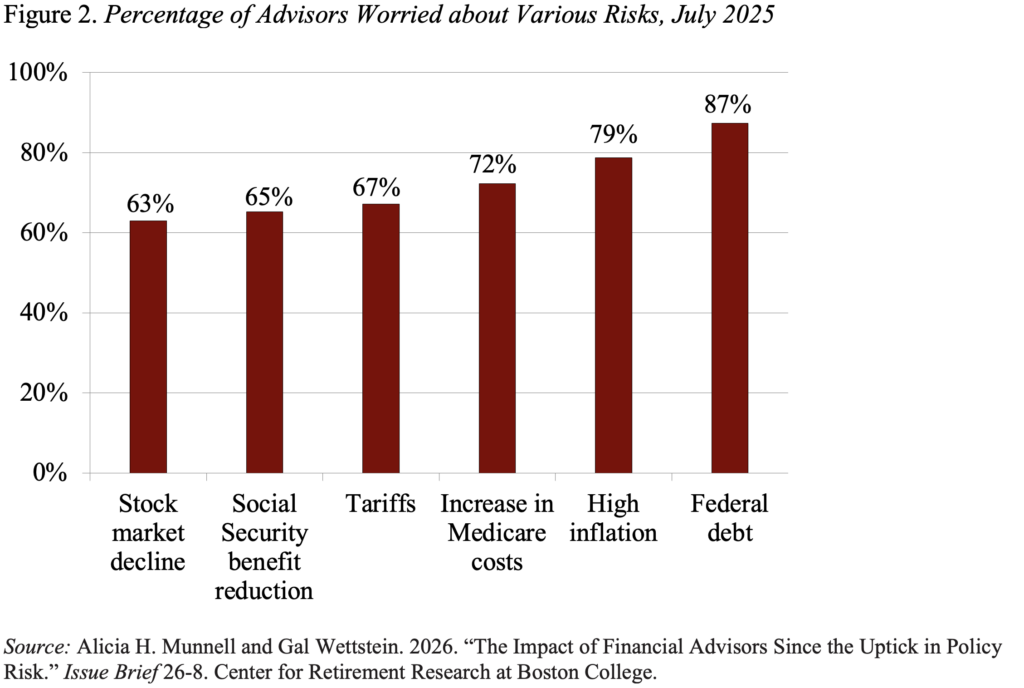
The advisors’ positive outlook, however, was somewhat contradicted by their concern regarding specific policy risks. Figure 2 shows that advisors were “worried” or “very worried” about a variety of risks. More than 60 percent of advisors were concerned about a stock market decline and a cut in Social Security benefits, while 87 percent were worried about the high level of federal debt.
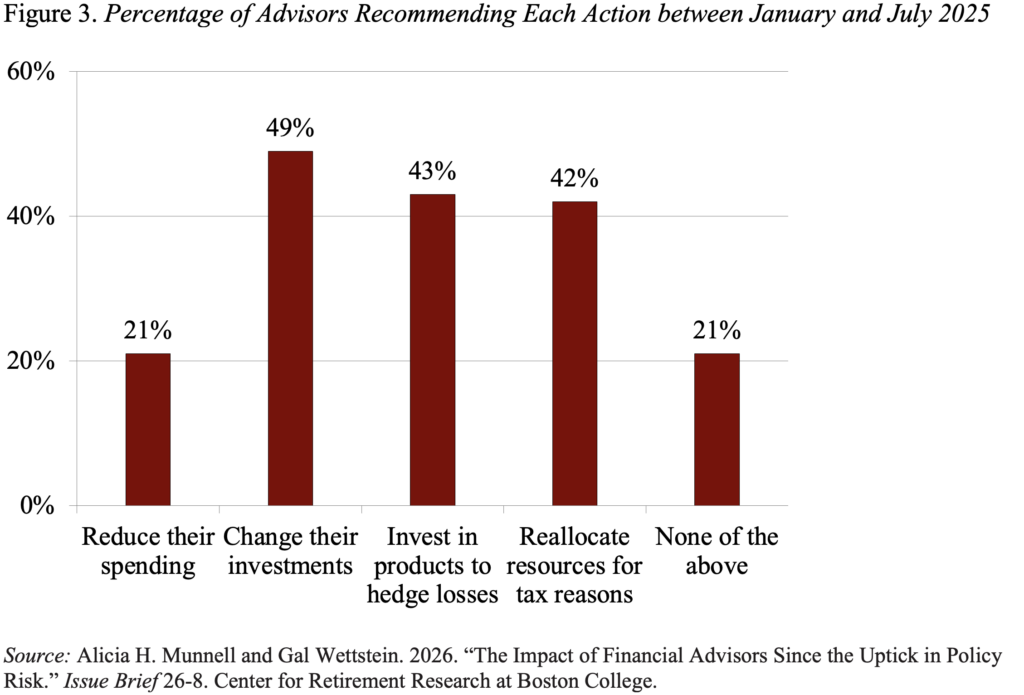
A substantial portion of these worried advisors recommended that their clients take precautionary actions (see Figure 3). In particular, 21 percent suggested cutting back spending; 49 percent advised changes to investments; 43 percent suggested acquiring financial products to hedge investment losses; and 42 percent recommended reallocation of resources, such as Roth conversions, based on the projection of higher future taxes.
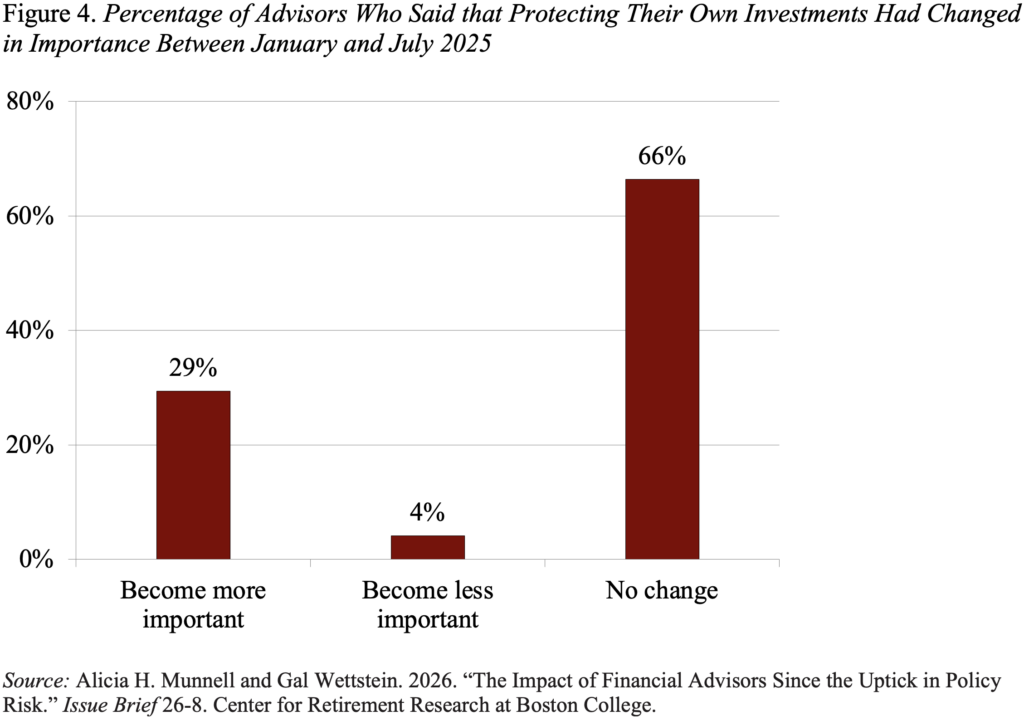
When asked about their personal investments, 29 percent of advisors said that the importance of protecting their assets had increased since 2024, while only 4 percent said that protecting assets had become less important; the remaining two-thirds said their views had not changed (see Figure 4).
Overall, the pattern of responses from advisors paints a picture of frothy optimism at a high level, coupled with a fundamental concern about the implications of policy on financial security. The ambivalence in advisors’ views may help explain why they do not appear to have much impact on their clients. A statistical analysis showed that having an advisor did not affect investors’ assessments of their investment strategy or their financial future.
In my view, at the time of the survey, the financial advisors were focused on the stock market; and a strong market meant that all was right with the world. It makes one wonder what a repeat survey of financial advisors would show today – when the war with Iran has sent oil prices soaring, the debt situation continues to deteriorate, and AI raises questions about the robustness of the stock market and the future of jobs – and what they would be suggesting for their clients.