



Why Are More Young Adults Living with Their Parents?





The brief’s key findings are:
- The share of young adults living with their parents has jumped by about one-third over the last two decades, reaching nearly 20 percent by 2025.
- This trend raises potential concerns about their future social and economic prospects, potentially delaying household formation and wealth accumulation.
- The analysis finds that economic factors – particularly the rising cost of rent and general price inflation – may explain a substantial part of the increase.
- However, other factors that are harder to measure are also at play; these could be tied to declines in marriage and fertility rates.
Introduction
Recent media stories have attracted renewed attention to a rise in young adults living with their parents.1 Explanations range from the economic (e.g., rising housing costs) to the social (e.g., smart phones keeping kids more tethered to their parents). Interestingly, young adults aren’t the only ones moving in with family. More Americans across the age spectrum are living in so-called “multigenerational” households. This brief – the first in a series of two – focuses on the experience of young adults ages 25-34. It explores whether economic forces are driving this trend or if other factors are also at work. The second brief will focus on the other end of the age spectrum: retirees who move in with their middle-aged children.
This brief proceeds as follows. The first section provides trends in multigenerational living by age. The second section looks at existing research on why more young people might be living with their parents, and the third section discusses the approach used in this analysis. The fourth section provides results. The final section concludes that rising rental costs, fewer rental vacancies, and general price increases since the Great Recession may explain some, but not all, of the trend in young adults living with their parents – which means that other forces that are harder to measure also seem to be at work.
While beyond the scope of this brief, understanding these other forces is an important topic for future research. At a societal level, young adults who live with their parents are less likely to start families. And at an individual level, these arrangements seem to stunt the accumulation of wealth.2 Plus, to the extent that higher rates of parental co-residence have common cause with recent declines in marriage and fertility, identifying these connections may inform a broad spectrum of research and policy questions that remain poorly understood.
Trends in Multigenerational Living
To explore trends in multigenerational living, this brief uses the Current Population Survey’s Annual Socioeconomic March Supplement (CPS-ASEC) from 1996 to 2025.3 One feature of the CPS is that it surveys all members of a household. It first identifies the “householder,” i.e., the person (or one of the persons) who owns or leases the home. The sample also includes this person’s spouse/partner, children, and any other relative or roommate/boarder that resides in the household. For each individual in the CPS-ASEC, this brief classifies their living status in two ways:
- In a Multigenerational Household: A household in which at least two adult generations are present (adults ages 25+).4
- As “Host” or “Guest”: The host is the householder or their spouse. All other individuals residing with them are considered guests.
Figure 1 shows the share of adults ages 25+ living in multigenerational households. From 1996 to the eve of the Great Recession in 2007, the number stayed relatively flat. However, it then rose by nearly one-third between 2007 and 2025.
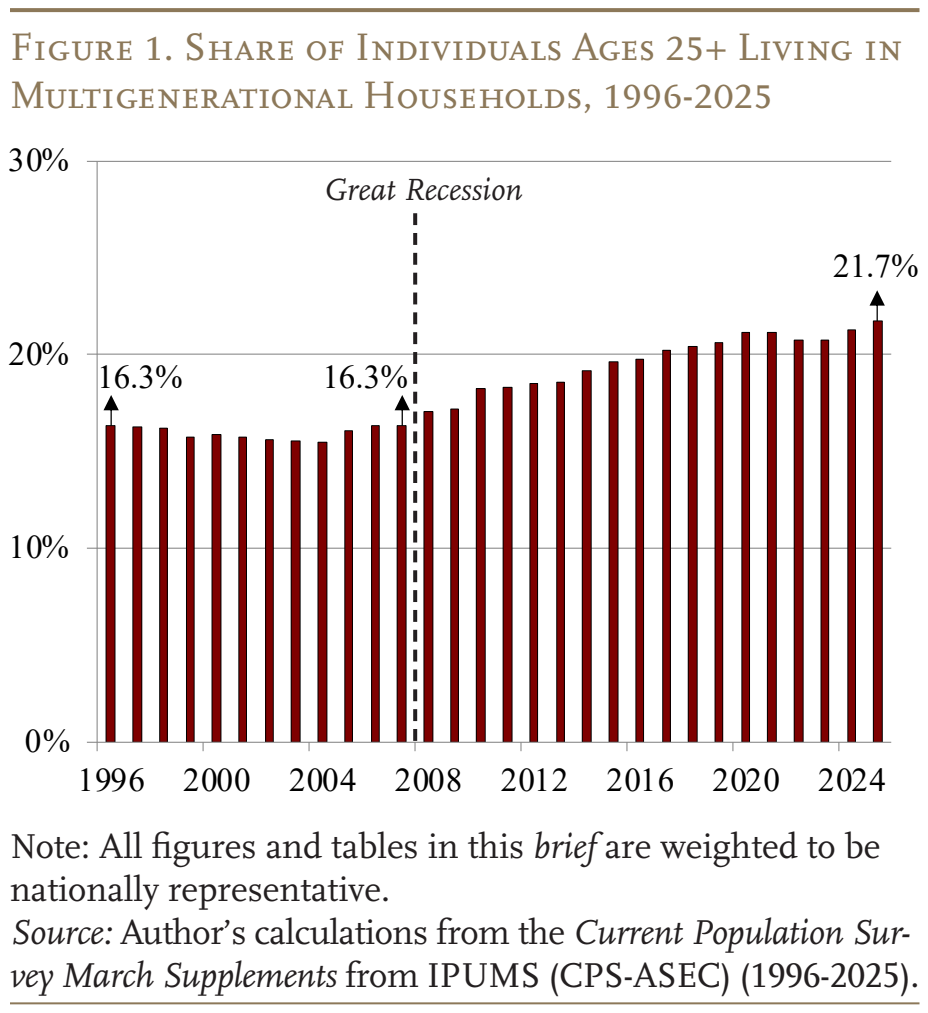
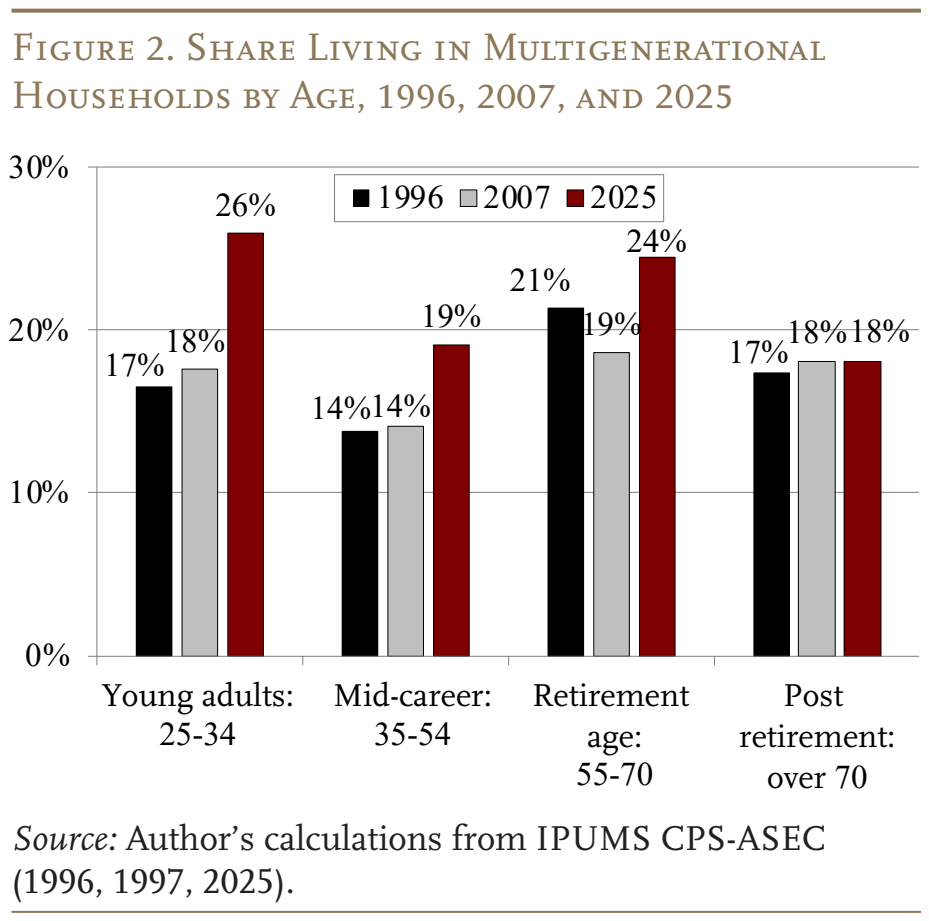
Figure 2 shows this trend across the age distribution of adults. Two items are of note. First, while young adults – the subject of this brief – have seen the fastest rise in multigenerational living, all age groups have seen increases. Second, except for older Americans, most of this growth has occurred since the Great Recession, suggesting that economic factors could be important.
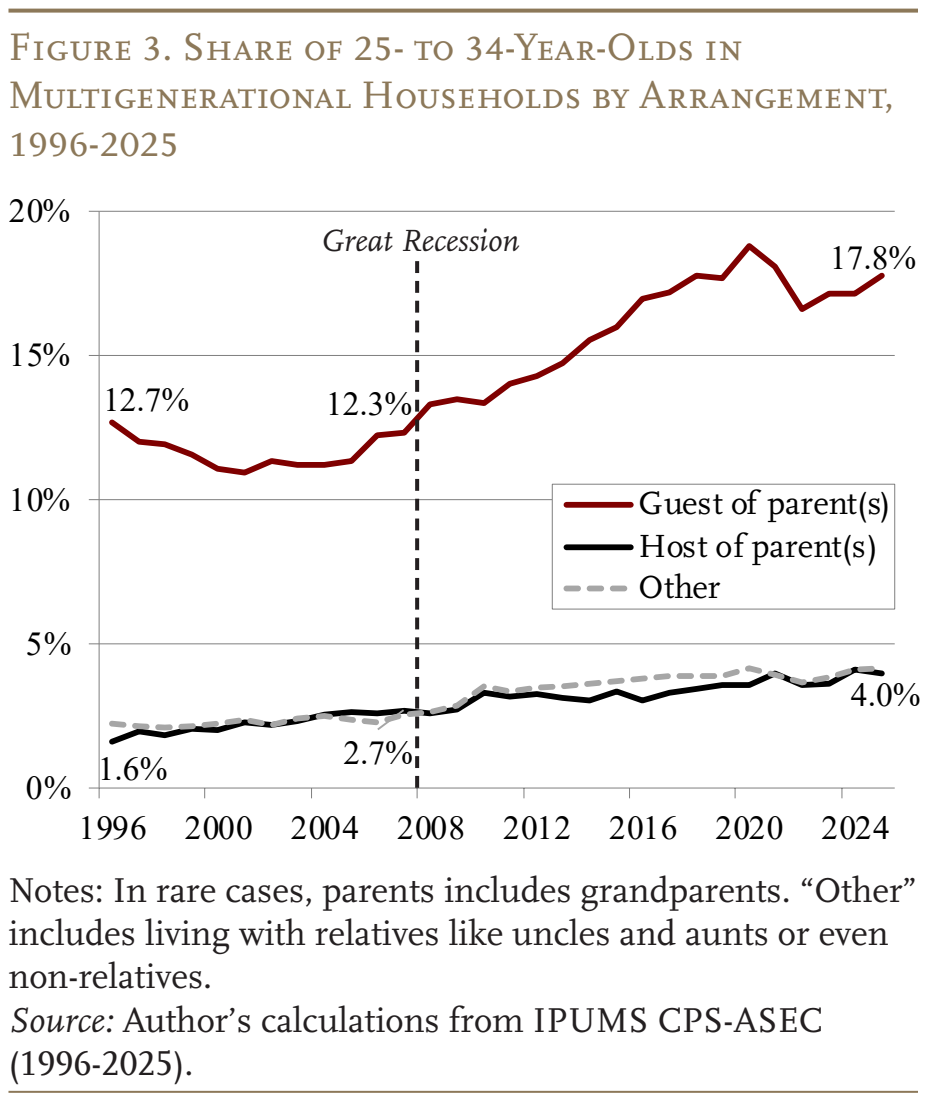
Beyond the overall rise in multigenerational living among young adults, Figure 3 highlights that recent news headlines have a point. Despite a dip during COVID-19, the majority of growth among those ages 25-34 has been through living as “guests” of their parents (or, in rare cases, their grandparents).5 That’s not to say that other arrangements aren’t rising too – the share of young adults hosting their parents increased from 1.6 to 4.0 percent. But that arrangement still accounts for a small share of multigenerational living for young adults and, in any case, will be discussed more in the next brief. For now, the question is: why are young adults living as guests of their parents more often than before the Great Recession?
Kids Living with Parents: What Do We Already Know?
Along with the popular press, academic researchers have also taken note of the rise of multigenerational living among young adults. For example, a 2022 study noted that it had reached the highest rate since at least 1971.6 Regarding potential causes, the same study noted that the increase was more extreme among the less educated and suggested that lower earnings might play a role, but did not examine the issue. A 2022 study of adults living in multigenerational households found that two-thirds said financial issues were a reason, but it did not explore empirically whether those issues were becoming more prevalent over time.7
However, a 2016 study did find a specific connection between economic forces and the rise in young people living with their parents.8 It showed that lower wages, fewer jobs, and higher rental costs were all associated with higher rates of young adults living with their parents. Indeed, that study found that economic forces could explain the entire rise in multigenerational living between 1960 and 2011 for young men. And, while young women seemed less responsive to economic conditions, these variables still explained much of the rise for them. But the analysis stopped at 2011, right at the beginning of the recent sharp increase.
Methodology
The analysis begins with a sample of individuals ages 25-34 from the CPS. The focus is on the probability that these young adults are guests in their parents’ home.
The goal is to explain the recent rise by determining the relative influence of the economic forces triggered by the recession vis-à-vis other unknown, “softer,” forces. To this end, a regression analysis is performed that controls for individual-level characteristics and also economic conditions. On the individual side, the regression controls for age, whether one is a college graduate, race/ethnicity, state of residence, residence in a metro area, and the area’s population.9 These variables are meant to capture the possibility that the trend over time is due to some demographic force. For example, one possibility is a rise in the share of individuals identifying as Hispanic, who may also be more likely to live with their parents for cultural reasons. Or, it could be that more people are living in states where policy or culture may make living with parents more amenable. Because the 2016 study above noted differential effects for men and women, the regressions are run separately for these two groups.
Next, several state- and regional-level variables are included as inspired by the 2016 study. First, two measures are used to capture the supply of housing: 1) the rental unit vacancy rate; and 2) the real monthly fair market rent as estimated by the U.S. Department of Housing and Urban Development.10 Then, two variables that measure labor market opportunities are also included: 1) the employment rate; and 2) the median annual earned income for people of the same education and state of residence as the respondent. These group labor measures are for those slightly older – ages 35-44 – than the individuals considered to avoid collinearity with education and state of residence and to limit endogeneity with living with parents (e.g., living with parents could discourage finding a new job or being out of work could encourage living with parents).11 Finally, to see if cumulative cost increases beyond just housing play a role, two regional inflation measures are added: 1) the most recent three years; and 2) a longer-term measure covering the three years before that. So, a total of six years of inflation are captured.12
The equation used is:
Prob(being parents’ guest) = f(demographics, location, labor market, rental market, prices, year)
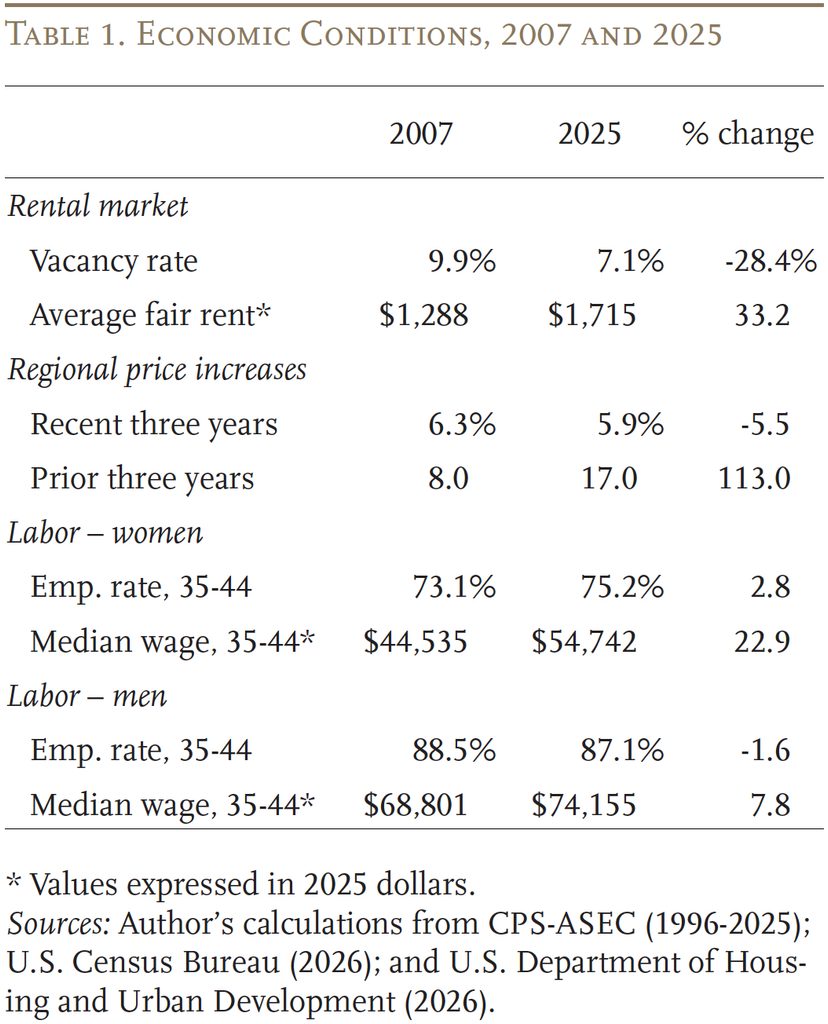
Table 1 shows how these variables have changed since right before the Great Recession. The table makes clear that if economic factors are behind the rise in young adults living with their parents, the rental market or longer-term price increases must play a role. While recent employment rates are similar to pre-recession levels and real wages have increased, rental vacancies are relatively low. And rental costs have risen faster than income combined with a burst of more general inflation in 2021 and 2022.13 Could the tight housing market and rising costs be the main drivers behind the increase in young adults living with their parents?
Results
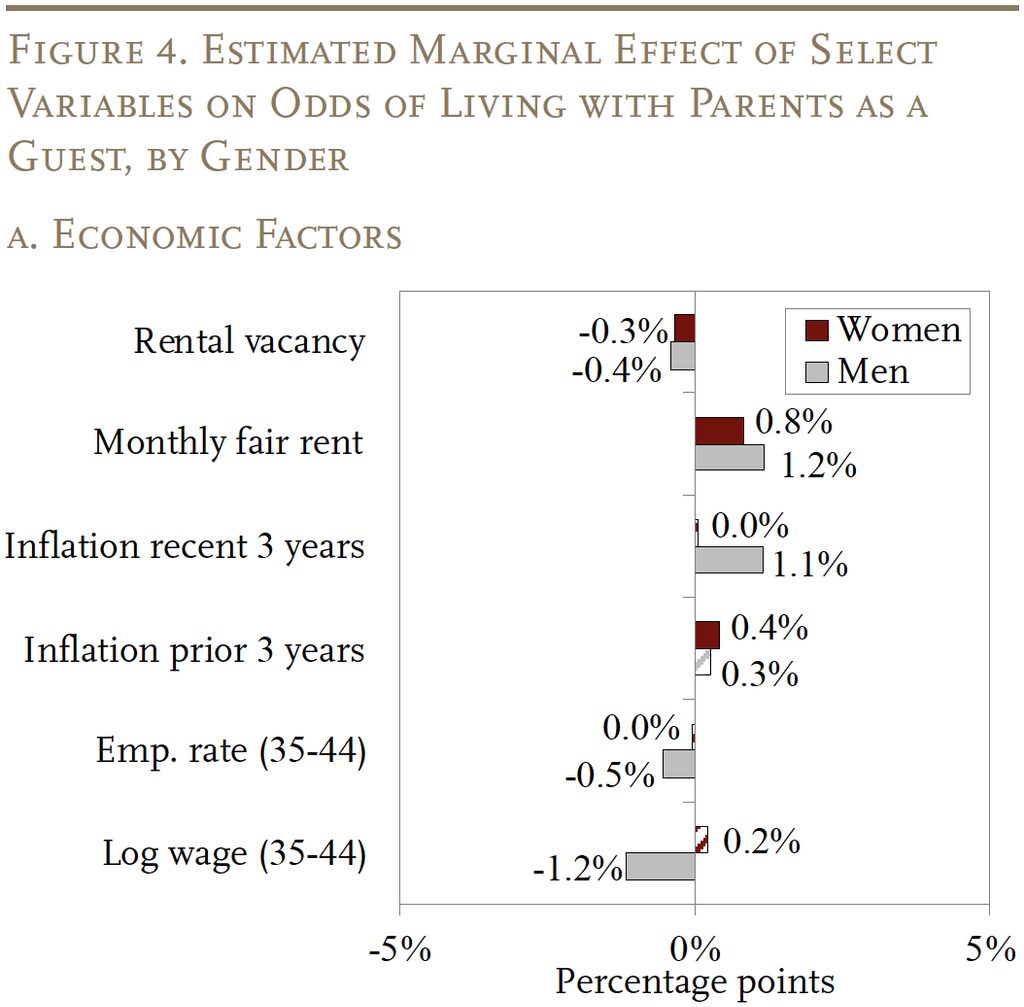
The regression results show the effect of key variables on the probability that someone lives with their parent as a guest. For both women and men, rental market conditions play a statistically significant role (see Figure 4a). Monthly rent has a much bigger effect than vacancy rates – a one-standard-deviation change in state-level monthly rent increases the odds of living with one’s parents by 0.8 and 1.2 percentage points for women and men, respectively. With respect to prices, men seem quite responsive to recent price changes while women are more responsive to past changes, an important distinction since the bout of unusually high inflation following COVID is now a few years distant. On the labor market side, similar to the earlier study, men are more responsive. For men, higher employment rates and wages are associated with significantly lower rates of parental living. No significant effect is observed for women.
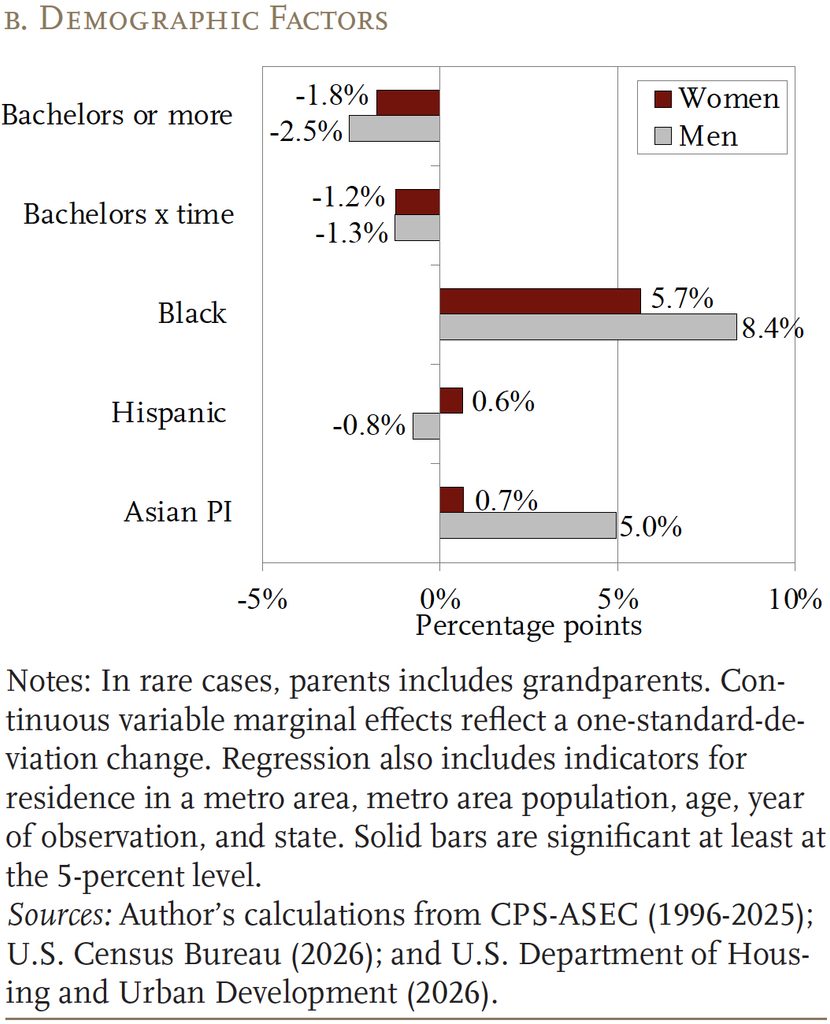
The figure also shows that different demographic groups have different rates of living with parents (see Figure 4b). Those with a bachelor’s degree or more are significantly less likely to have this arrangement, a gap that has been growing with time. Black individuals and Asian men are significantly more likely to live with parents. But even though the coefficients on Black individuals and Asian men are large, their population shares have grown less than have those with a bachelor’s degree. The effects essentially net out. So, despite their statistical significance, they provide little explanation for the increase in adult children living with parents.
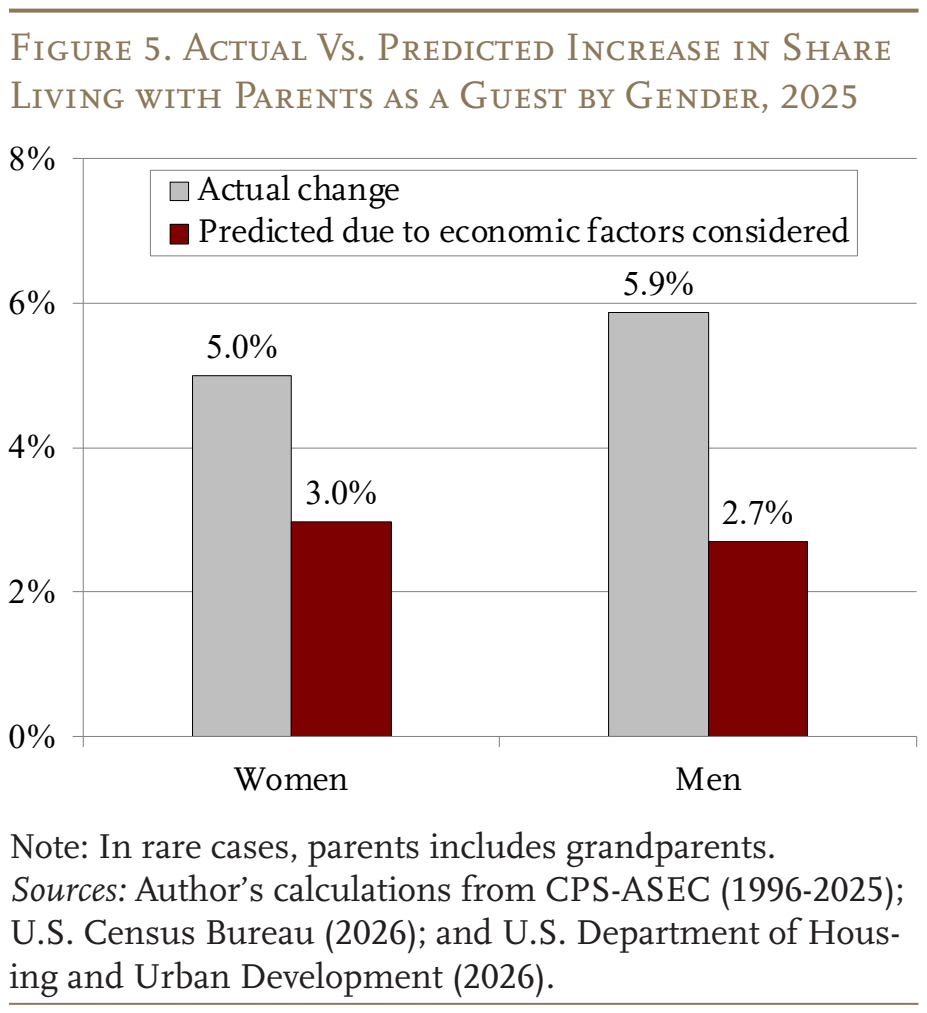
Overall, then, economic conditions do partially explain the increase in young adults’ living with parents, accounting for a bit more than half the increase for women and a bit less than half for men. Figure 5 illustrates this result by using the regression results in a counterfactual exercise: changing the economic variables to equal their 2007 values and seeing how much the predicted share living with their parents would be expected to drop. The answer is 3.0 and 2.7 percentage points higher for women and men respectively. But the share living with parents increased by more since 2007 – by 4.9 and 5.9 percentage points. The finding that these variables do not fully explain the rise shouldn’t be surprising. Table 1 shows that while rental markets have deteriorated significantly since 2007, labor markets have returned to normal (and don’t matter for women in any case). And while rising prices matter, the COVID-era inflation only still seems to have an impact on women at this point.
What other factors – beyond economics and demographics – could be at play here? Determining these factors is beyond the scope of this study. But a little informed speculation can identify some plausible influences. One possibility is that the rise in these living arrangements are just side effects of declining marriage and fertility rates – if one is not married with kids, living with one’s parents could be seen as a viable option. The problem is that these trends are not very well understood either. On marriage, the decreased economic necessity of marriage – as women’s earnings and employment growth have outpaced men’s for decades – could be a factor.14 And the explosion of digital technologies that give alternatives to in-person relationships combined with an increased emphasis on careers versus child-rearing likely plays a role.15
But the other possibility is that the rise in living with parents is somehow a cause of declining marriage and fertility. For example, perhaps increased closeness to parents facilitated by smartphones or even just gentler parenting styles leads young adults in their 20s and early 30s to be more comfortable living with their folks. But, then, the arrangement can become longer lasting. Indeed, some research has shown that those living with parents in these crucial years are much less likely to form their own households later in life.16 Whatever the cause, understanding the rise in young adults’ multigenerational living is an important topic for future research.
Conclusion
The attention paid to young adults living with their parents can sometimes seem judgmental – why can’t these kids grow up? A 2006 romantic comedy entitled “Failure to Launch” even made light of the arrangement. But the questions and consequences surrounding its rise are real and important. Economic factors supply only a partial answer.
As policymakers across the developed world grapple with the implications of declining marriage and fertility for the finances of social insurance programs, the issue of more adult children living with parents should also be on their radar. To the extent that a rise in living with parents shares common cause with declining marriage and fertility, then understanding it could shed light on these trends as well. If, instead, the increase in living with parents is actually driving these declines, understanding it becomes even more salient.
References
Blank, Susan. 1998. “Hearth and Home: The Living Arrangements of Mexican Immigrants and U.S.-Born Mexican Americans.” Sociological Forum 13(1): 35-59.
Choi, Jung, Jun Zhu, and Laurie Goodman. 2019. “Young Adults Living in Parents’ Basements: Causes and Consequences.” Research Report. Washington, DC: The Urban Institute.
Cohn, D’Vera, Juliana Horowitz, Rachel Minkin, Richard Fry, and Kiley Hurst. 2022. “Financial Issues Top the List of Reasons U.S. Adults Live in Multigenerational Homes.” Washington, DC: Pew Research Center.
Fry, Richard. 2022. “Young Adults in U.S. Are Much More Likely than 50 Years Ago to be Living in a Multigenerational Household.” Washington, DC: Pew Research Center.
Gete, Pedro and Michael Reher. 2018. “Mortgage Supply and Housing Rents.” The Review of Financial Studies 31(12): 4884-4911.
Gorny, Danielle. 2026. “A Third of Young Adults Still Live With Their Parents.” (July 8). New York, NY: The New York Times.
He, Wei and Shaomeng Jia. 2024. “Exploring Multigenerational Co-residence in the United States.” International Journal of Housing Markets and Analysis 17(2): 517-538.
IPUMS USA. 2026. IPUMS CPS: Version 12.0 [dataset]. Minneapolis, MN: University of Minnesota.
Kearney, Melissa Schettini and Phillip B. Levine. 2026. “Is Low Fertility in High-Income Countries Here to Stay?” Issue in Brief 26-5. Chestnut Hill, MA: Center for Retirement Research at Boston College.
Le, Thao. 2025. “The Scarring of the Great Recession on Construction Labor and Housing Supply.” Real Estate Economics 53(3): 543-573.
Lundberg, Shelly, Robert A. Pollak, and Jenna Stearns. 2016. “Family Inequality: Diverging Patterns in Marriage, Cohabitation, and Childbearing.” Journal of Economic Perspectives 30(2): 79-102.
Matsudaira, Jordan D. 2016. “Economic Conditions and the Living Arrangements of Young Adults: 1960 to 2011.” Journal of Population Economics 29: 167-195.
Schieber, Noah. 2026. “Moving Back Home After College? All Your Friends Are Doing It?” (August 2). New York, NY: The New York Times.
U.S. Census Bureau. 2026. “Housing Vacancies and Ownership: Rental Vacancies by State.” Washington, DC.
U.S. Department of Housing and Urban Development. 2026. “HUD Fair Market Rents.” Washington, DC.
Endnotes
- For example, see Schieber (2026) or Gorny (2026). ↩︎
- See Choi, Zhu, and Goodman (2019) for a discussion of the effect of living with parents on household and wealth formation. ↩︎
- 1996 is chosen as the starting point because it is the first year that self-reported health data are available, an especially important variable for the older Americans explored in the second brief. ↩︎
- This definition includes parents living with adult children and also other relatives either 20 years older or 20 years younger than the CPS-identified “householder.” A multigenerational household could potentially only include one adult generation if, say, grandparents reside with their minor grandchildren without the grandchildren’s parents present. This brief follows a similar definition as Cohn et al. (2022). The data do not allow separate identification of those who moved into one of these households after living independently versus those who have lived in one of these households their entire lives. ↩︎
- Less than 5 percent of those living as guests with parents or grandparents lives with a grandparent. ↩︎
- See Fry (2022). ↩︎
- See Cohn et al. (2022). Other indirect evidence that economics might matter is that multigenerational living has been more common among typically lower-income groups, like those with less education and Black and Hispanic individuals. For example, see He and Jia (2024) or Cohn et al. (2022) for recent data on race and education. See Blank (1998) for information on newly arrived immigrants. ↩︎
- See Matsudaira (2016). ↩︎
- Status as a bachelor’s degree holder is also interacted with time in the event that increases in student debt have changed this variable’s impact. ↩︎
- A variable measuring homeowner vacancy was also included but did not approach significance, likely due to collinearity with rental vacancy. Data on housing costs at the state level were also considered, but quality data going the full length of the analysis are lacking. ↩︎
- Matsudaira (2016) took a similar approach. ↩︎
- Longer term inflation was considered but did not matter for either gender. ↩︎
- For information on how the Great Recession may have had long-term impacts on housing, see Gete and Reher (2018) or Le (2025). ↩︎
- For example, see Lundberg, Pollak, and Stearns (2016) for a discussion of declining marriage rates, their potential causes, and the difficulty understanding them. ↩︎
- See Kearney and Levine (2026) for a discussion of declining fertility and its potential causes. ↩︎
- See Choi, Zhu, and Goodman (2019) for a discussion of the long-term impact of living with parents. ↩︎



Sanzenbacher, Geoffrey T.. 2026. "Why Are More Young Adults Living with Their Parents?" Issue in Brief 26-19. Chestnut Hill, MA: Center for Retirement Research at Boston College.