



Aging Event Highlights Ways to Improve Senior Care Worldwide





I recently attended the joint Leading Age and Global Ageing Network conference in Boston. Leading Age is the trade association of the nonprofit elder care providers, covering senior care facilities and home health. The Global Ageing Network (based in Britain) promotes the sharing of ideas and experiences among elder service providers internationally. The event – titled “The Power of Purpose: Creating Ripples of Change” – attracted more than 6,000 people from around the world to learn how they can improve the lives of seniors and people with disabilities in their care.

The attendees participated in dozens of breakout sessions, most of which addressed the nitty gritty of running an elder care facility or program. The exhibit hall was overwhelming with over 100 vendors hawking their services.
The sessions I attended included the difficulties of providing care to elders in Africa in the face of huge demographic changes, new software to assist family caregivers, and how changing U.S. immigration policy is shrinking the caregiver workforce.
Africa
Older Africans are living longer as their children and grandchildren, who traditionally provided care, are moving from rural areas to the cities – not so different from trends in the United States. Francis Njuakom from Cameroon spoke movingly of the difficulties faced by older women who were often married to older men, sometimes as one of several wives. They typically lose their standing and protection when their husbands pass away and, as a result, lack respect and dignity in their communities. His organization is working with younger people to create volunteer activities that support older residents including gardening, bee-keeping, and raising goats.
Software
The next session I attended introduced emerging software solutions for family caregivers. One was by a start-up, Trualta, which provides online services, including a learning library of videos, useful checklists, webinars, and peer support groups. It’s dynamic, so users receive information about its offerings as their needs for support progress.
Immigration
Luis Salvador of the American Business Immigration Coalition and Misty Chally from the Critical Labor Coalition explained, that according to KFF Health News, about one-quarter of the long-term care workforce is made up of immigrants. The Trump administration has announced the end of parole and temporary protective status for several countries and instituted total travel bans on various countries, meaning that their citizens can no longer receive work-related visas to come to the United States. Salvador and Chally are linking up with other organizations, such as those representing farmers, who are trying to ease these restrictions and open up new pathways for workers to come to here, such as three-year renewable work visas.
Cycling Without Age
Finally, one of the more uplifting segments of the conference was the showing of a documentary about a movement to get seniors out in the open air with bikers taking them around in specially-built rickshaws. The Cycling Without Age movement, which was started in Copenhagen, has chapters in 41 countries.
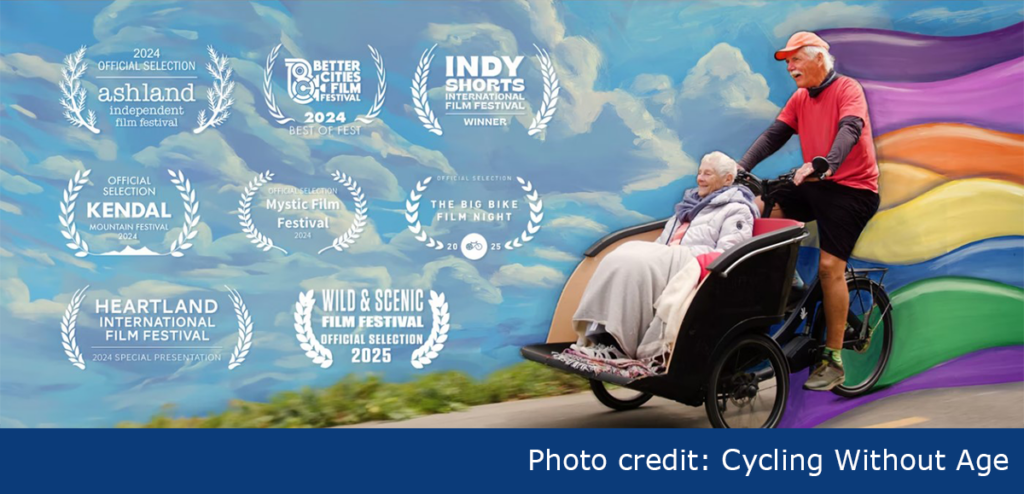
The documentary describes the experiences of the Santa Barbara chapter taking out seniors from an assisted living facility. It appears to be enjoyable and enlivening both for them and for the bikers – or “pilots” – who take them out on rides. It features chapter founder John Seigel-Boettner and was created by his two sons, all of whom were at the conference.
For more from Harry Margolis, check out his Risking Old Age in America blog and podcast. He also answers consumer estate planning questions at AskHarry.info. To stay current on the Squared Away blog, join our free email list.