


A New Senior Living Model for the Middle Market?





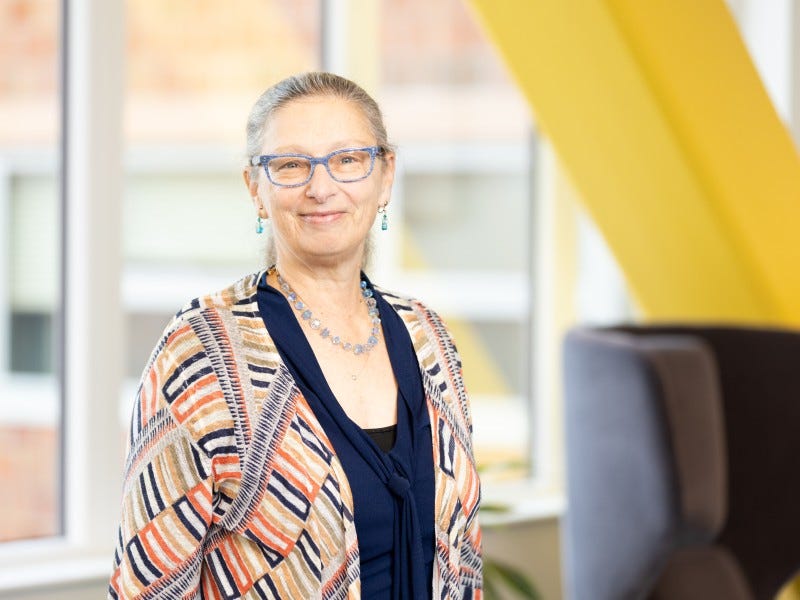
I recently toured Opus, an inspiring new senior living development in Newton, Massachusetts, and then had a conversation with its founder, Amy Schectman, on my Risking Old Age in America podcast.
Amy explained to me how she had helped develop both a high-end senior living development, NewBridge on the Charles, and lower-income senior housing, Brown Family Life. With Opus, she was seeking to create housing for the often-overlooked middle market. She said that she and her team worked through many challenges in making the economics work without the prices they could bring for the higher-end market nor the subsidies available for lower-income housing. She feels that they can repeat this prototype elsewhere.
Excerpts from Our Conversation
Risking Old Age in America (ROA): The people at NewBridge, of course, have more wealth and there’s more money there, so I assume they are offered more services than at the other two places?
Amy Schectman: No, I would not say that. They pay for it differently but, if you look at the core services, they are at all three places.
What might be different? Newbridge has three dining facilities. You can eat in the deli or at one of two dining rooms. At Opus, you have one physical facility, but you’re going to have different kinds of meals. So it’s a little bit different, but I wouldn’t say more [services] at all.
I think what we have done at 2 Life Communities is to define the paths to optimal aging. And we feel like we provide that entire package. I don’t think you can do more than that.
ROA: So what are the parts of that path?
Schectman: You need three…critical components to age optimally. The first is lifetime affordability. Housing is the biggest budget item [in] any…older person’s portfolio, but you have to think about what are you going to need later on too. They say [a large majority] of baby boomers are going to need significant home care for [a number of] years…If you’re in a private home, that’s really expensive because the minimum home health shift you can buy is four hours or five hours. So, at all of our places, we always make sure to structure the economics so that people have enough for their entire lives.
The second piece that everyone has to have is social connection. If you don’t want to be lonely in your eighties and nineties, you have to be in a place where you’re making new friends and new connections. It’s inevitable that your networks otherwise shrink over time.
And the third piece is navigating the home and healthcare system. I wish we had a system where nobody had any problems advocating for themselves to get all the care they need, but we don’t. At all of our campuses including Opus Newton, we have care navigators. When you need help, say coming home from [the hospital after] a hip replacement, or I don’t know whether I’m supposed to get help with meals, or how am I supposed to organize myself if I have a knee injury. Somebody that’s your partner helps you put all those pieces in place.
A second level of how we organize things is all the activities that allow everyone to find their path into community. For you, it might be a book club, it might be a music event, for somebody else, it’s going be a dining program or a fitness program.
You have to have an array of opportunities so everyone can find their way into community. That’s a constant at all of our campuses. At Opus Newton, we have an additional element, which is that everyone has agreed to volunteer at least 10 hours a month. Some of the ideas people have come up with, I would say [provide residents with more options] than any place in the country: We have two theater troupes, one that’s doing storytelling, one that’s putting on plays. We have a chorus. We have a canasta club, bridge club, mahjong club. We have a class on nature. All resident-led.
My Concluding Thought
During our conversation, Schectman also explained to me how it took her and her team eight years to develop a model that would work for the “missing middle.” They recognized that this group, at least in the Boston area, often has substantial home equity but is scared of a long-term financial commitment. So they worked to keep the monthly carrying costs moderate while the buy-in is substantial, but partially refundable at death or upon moving out. Now that they have created the model, they hope to replicate it in other locations.
Listen to our entire conversation here.
For more from Harry Margolis, check out his Risking Old Age in America blog and podcast. He also answers consumer estate planning questions at AskHarry.info. To stay current on the Squared Away blog, join our free email list.

Comments are closed.


The best idea EVER! How can this be replicated in other states?