


Can Technology Make Home Care Services More Affordable?





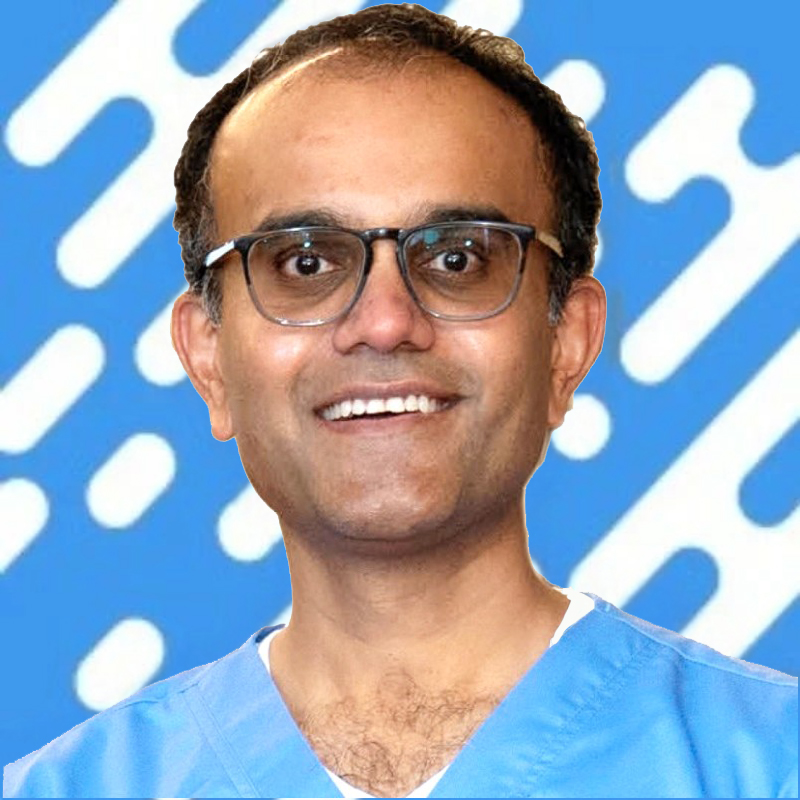
Neal K. Shah, the founder of CareYaya, a company that links students in the healthcare field with seniors needing assistance, has some strong opinions about elder care in the United States. The word Yaya means ‘grandmother’ in Greek and ‘caregiver’ in Swahili and Thai. As an acronym, it also means ‘You Are Your Advocate.’
In a recent podcast, Mr. Shah told me about how CareYaya works and how we should transform elder care in the United States. Here are some extracts from our conversation:
Risking Old Age in America: Why don’t we start [with] what CareYaya is and how you got into this business?
Neal K. Shah: We are actively working hard to solve the elder care crisis by connecting people with very affordable care, probably the most affordable home-based care in America – approximately $20 an hour as compared to typical agencies charging $35 to $40 an hour.
We connect everyone digitally through an online platform. Many…call it the “Uber of caregiving.” We have mobilized a workforce of over 50,000 college students across the country to care for the older adult population.
ROA: I recently had a guest on who runs a home health agency. She would argue that they provide value added in terms of supervision and coverage if someone can’t make it. They also handle all the employer obligations, including FICA stuff and workers’ comp. How does that correspond with what you’re offering?
Shah: We don’t directly compete with the home care agency industry just because the market is so large. Depending on which stats you look at, home health care is approximately a $500 billion per year market. The Rand Corporation put a study out that it’s one of the biggest markets in the country that…[often] operates in the gray market. So [a large share] of the market books informally.
Of the $40 an hour that you’re paying [to an agency], something like $5 is going to franchise royalties, something like $5 is going to the local agency’s profit margin. Another $5 is going to extremely manual booking and scheduling and a massive team of people doing work that can be done better with technology. And then another $5 to $8 is going into advertising – a lot of Facebook and Google ads – and to local salespeople schmoozing with doctors and nurses.
You just have this insanely inefficient infrastructure where more than $20 per hour of what you’re paying is wasted on frivolous stuff. And the person doing 99% of the work is capturing less than half.
. . .
ROA: You have commented that the United States is good at healthcare, but not good at “social” care. What do you mean by that?
Shah: Health care plus social care…spending [is] around…18 to 20% of GDP per year. That’s also true of parts of Europe and parts of Asia. But in that distribution in the US the majority of that money is spent on medical care and a minimal amount on social care. We have great MRIs, PET scans, and all these pharmaceuticals. But [outside of Medicaid] there’s virtually zero spending from a governmental perspective on helping that person stay at home, helping that person stay safe, getting caregivers, that’s all out of pocket.
So that’s what I mean, that these social services are grossly underfunded.
. . .
ROA: And you say that the longevity grift isn’t about living longer, it’s about the wealthy trying to buy their way out of being human. There are a lot of wealthy people investing in in anti-aging stuff. There are some doctors who argue we ought to be researching aging, not specific diseases or one organ at a time. You’re a critic of that approach.
Shah: Yes. The spoiler: it won’t work for a couple of reasons. One, from a social impact perspective, aging and caring for the currently aging population is a now thing. We can’t wait.
Second, these science experiments and fantasies of people I think have a low probability of success in my opinion. So there’s an insane overallocation of funding to something that, in my opinion, is frivolous and unlikely to happen.
Listen to our entire conversation here.
Topics
00:00 Why Getting Care Help Is So Frustrating (Caregiver Reality Check)
00:26 Meet Neal Shah & the Mission Behind CareYaya
01:01 How CareYaya Works: Healthcare Students, Digital Booking, Lower Cost
02:19 What Kind of Care They Provide (Home Care vs. Home Health)
03:29 Why Home Care Is So Expensive: Middlemen, Markups, and Bad Experiences
06:02 CareYaya’s “Costco Model”: Tech Efficiency, Reliability, and Better Pay
08:03 Employer Paperwork & the Gray Market: Taxes, Workers’ Comp, and DIY Tradeoffs
09:56 Neal’s Origin Story: From Hedge Funds to Family Caregiving
12:48 Funding & Business Model: For-Profit, No Fees (Yet)
13:54 What Are Impact Funds? Patient Capital for Long-Term Social Change
16:23 Switching Gears: The U.S. Is Great at Healthcare, Bad at Social Care
16:45 Why the U.S. Underspends on Social Care (Dementia & Cancer at Home)
18:02 The Hidden Army of Family Caregivers—and the Trillion-Dollar Burden
18:36 Boomers Turning 80: The Coming Care Crunch & Workforce Dropout Risk
19:34 Who Should Pay? Private Sector, Tax Breaks, and Employer Elder-Care Benefits
21:42 Preventing Hospitalizations: Loneliness, Home Support, and Medicare’s Incentives
23:17 Medicare Advantage Critique and the Fragmented Payer Problem
24:21 The “Longevity Grift”: Why Anti-Aging Hype Misses the Real Crisis
28:37 Policy Advice: Invest in Home-Based Care and Build the Care Workforce
30:29 Advice for Boomers: Plan Early, Save More, and Rethink HSAs
33:05 Closing Thoughts and Farewell
For more from Harry Margolis, check out his Risking Old Age in America blog and podcast. He also answers consumer estate planning questions at AskHarry.info. To stay current on the Squared Away blog, join our free email list.

Comments are closed.



Question – Given the comparison of this company to Uber, are these students paid as employees or contractors, meaning SSA withholdings and employer matches etc. or not? I, as an older person, am really tired of seeing younger generations being taken advantage of for the sake of others’ wealth.
My understanding is that CareYaYa does not act as the employer, so it doesn’t pay worker’s compensation, withhold FICA or pay the employer’s share. It’s instead simply a matching services, leaving such issues to the actual employer. The money I believe does not flow through CareYaYa, so it that way it’s different from Uber and similar services.
The students are paid directly by the families – there is no “middleman” fee or payment processing by CareYaya – for maximum social impact and access to affordable care. You can learn more here:
https://www.careyaya.org/resources/whitepaper/health-equity
and here:
https://www.careyaya.org/about