


Small Business Retirement Plans: A Primer




The brief’s key findings are:
- Small firms are the primary source of the retirement plan coverage gap.
- One barrier to plan adoption is financial uncertainty, but many small employers overestimate the cost and administrative burden of offering a plan.
- The small firms that do have plans tend to be larger, more stable, and more likely to view them as a tool for recruitment and retention.
- Advisors to small firms, such as accountants and payroll providers, could assist in boosting plan adoption, but they may need training to be most effective.
- State auto-IRAs, PEPs, and fintech innovations may also help increase coverage, but firms still need clear information, trusted guidance, and simple processes.
Introduction
At any moment in time, only half of U.S. private-sector workers are participating in an employer-sponsored retirement plan, mainly due to lack of coverage. As a result, roughly one-third of households end up completely reliant on Social Security at retirement, while others move in and out of coverage throughout their careers and end up with only modest 401(k) balances. The lack of consistent coverage is driven by small employers. Only about half of small employers (those with fewer than 100 employees) offer a retirement plan compared to over 90 percent of large employers.
This brief reviews what we know about small business plans, drawing primarily on recent work from the Center for Retirement Research (CRR), supplemented by evidence from industry, policy, and other academic sources.
The discussion proceeds as follows. The first section explores why small employers are less likely to offer a retirement plan than their larger counterparts. Yet, since about half of small businesses do offer a retirement plan, the second section explores the characteristics of small businesses with a plan. It also gauges the potential of those who provide services to small businesses – such as accountants, lawyers, and bankers – to further promote the adoption of retirement plans. The third section assesses whether various government initiatives and fintech innovations have moved the needle on coverage.
Why Are Small Firms Less Likely to Offer Retirement Plans?
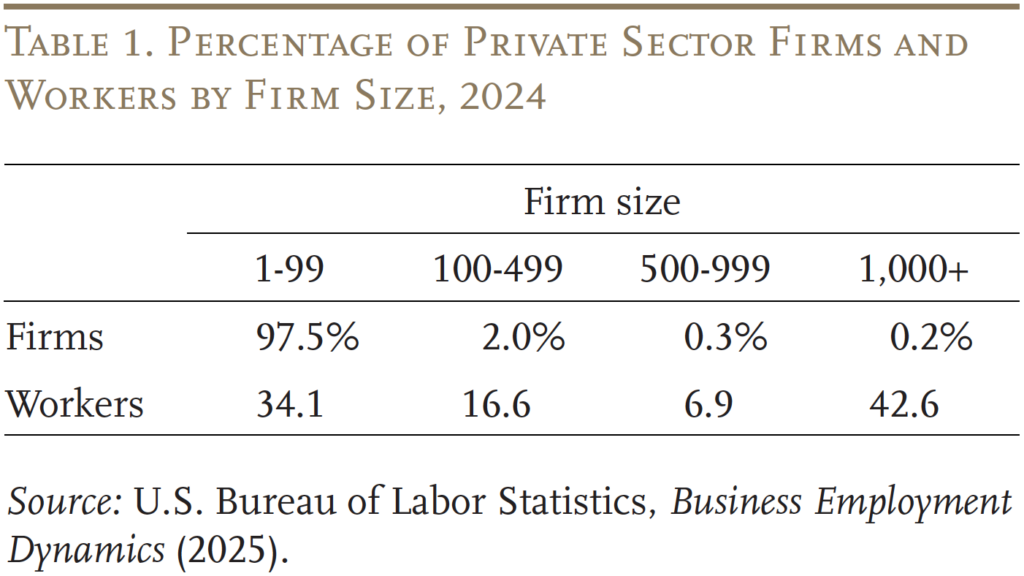
Small businesses – those with less than 100 employees – account for the vast majority of all firms and about a third of all workers (see Table 1). Therefore, the extent to which these firms enable their employees to save for retirement is a major issue.
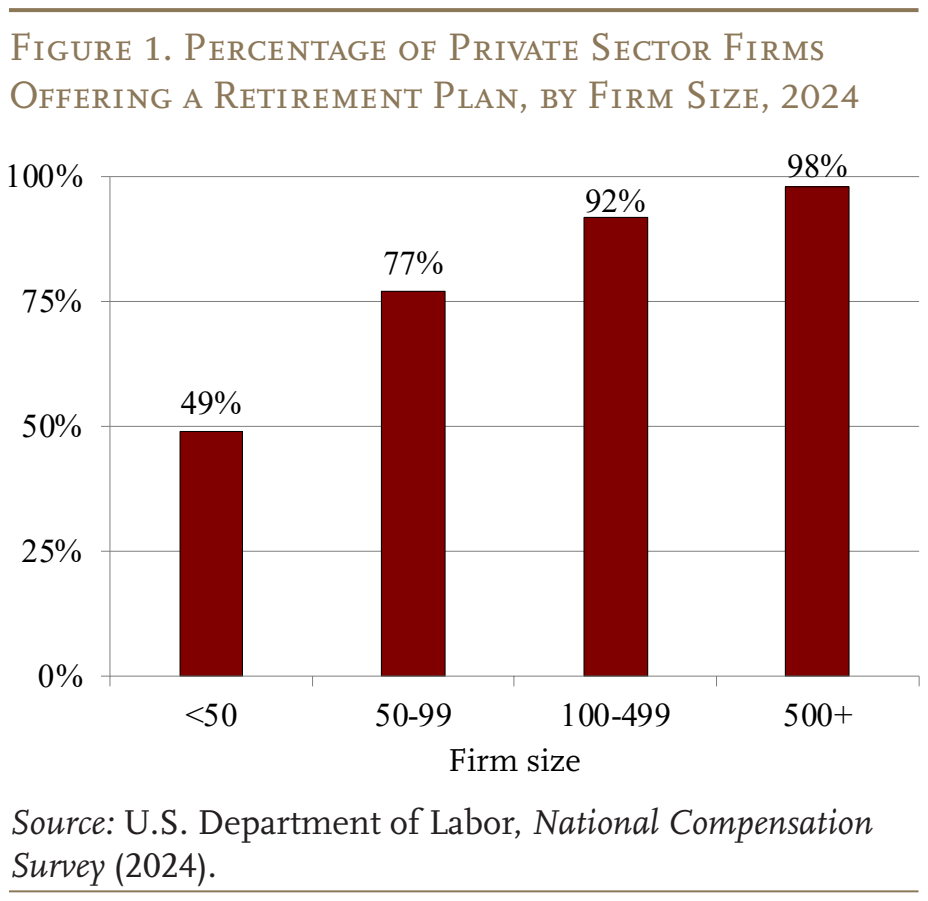
Not surprisingly, retirement plan coverage in the United States is closely related to size. Large firms generally have dedicated human resource departments, stable revenue streams, and sufficient scale to spread administrative costs. Small firms often do not. Indeed, among the largest firms, 98 percent offer plans compared to only 49 percent of the smallest firms (see Figure 1).
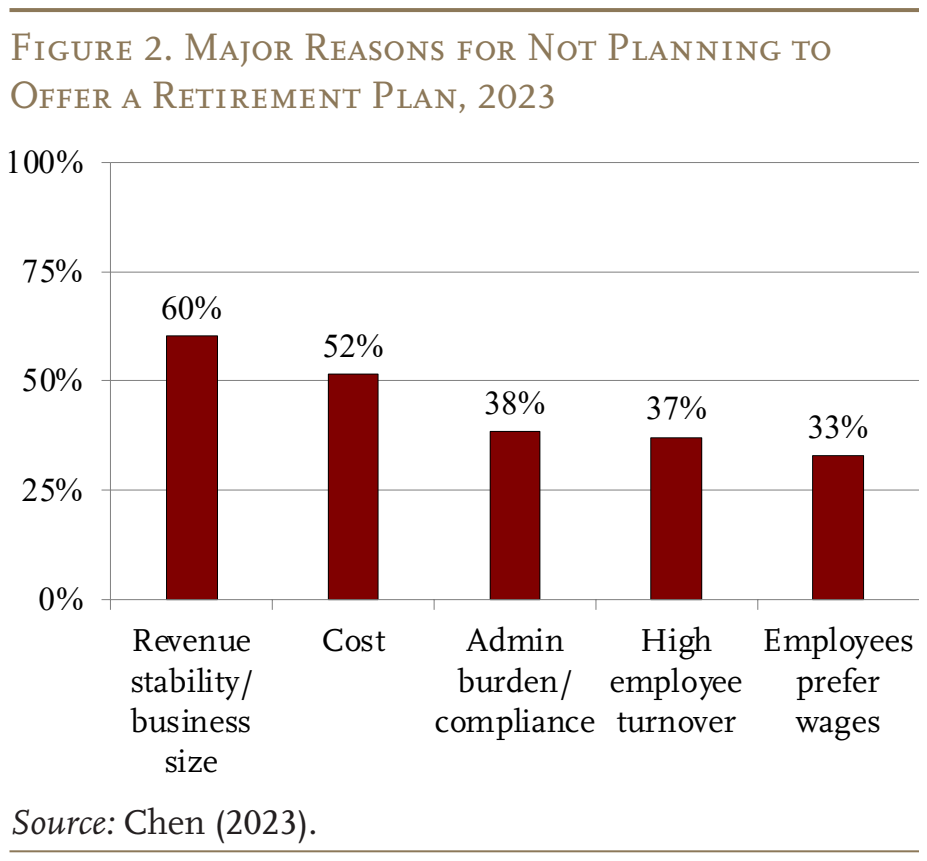
A 2023 Small Employer Retirement Survey, sponsored jointly by the CRR, the Employee Benefit Retirement Institute, and Greenwald Research, identifies three consistent barriers reported by small employers that do not offer plans: 1) concern about firm size and stability; 2) perceived costs and complexity of retirement plans; and 3) employee preferences (see Figure 2).
Firm Size and Stability
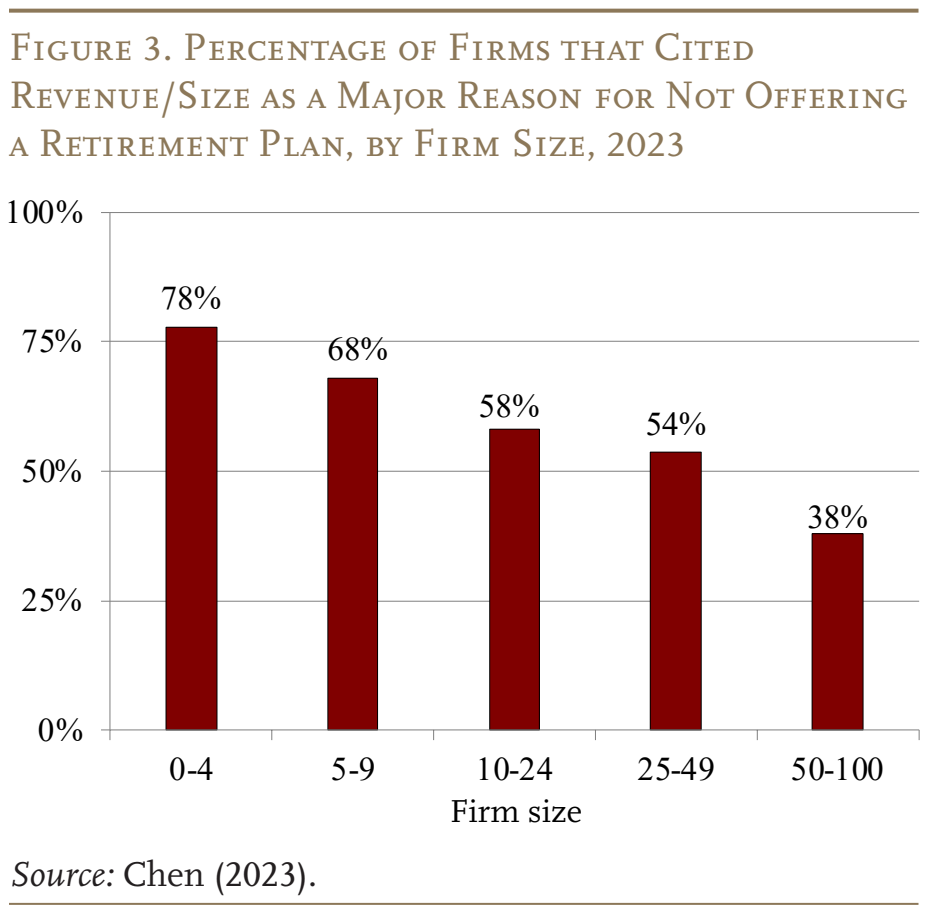
Many small businesses operate with narrow margins and volatile revenues, especially when they are new. Owners often view retirement benefits as a long-term commitment that may be difficult to sustain during periods of weak cash flow. Survey responses indicate that many employers believe their businesses are simply “not large enough” or “not established enough” to support a retirement plan. They tend to view retirement plans as discretionary, while payroll, rent, insurance, and inventory costs are immediate and unavoidable. These concerns about financial stability are especially common among firms with fewer than 25 employees (see Figure 3).
Costs and Complexity
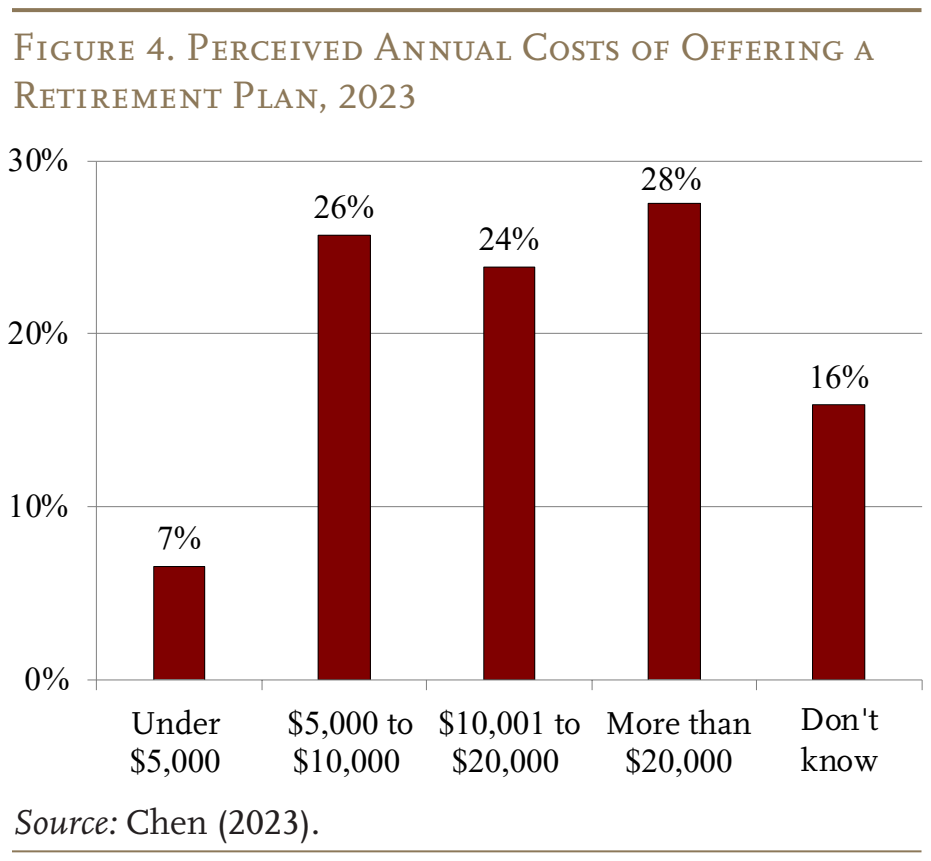
While the smallest firms may simply have too much on their plate to add another benefit, more established firms cite costs and administrative burden as the major barrier. Interestingly, many of these firms do not have a good idea of how much expense or time is actually involved in providing a plan. Several 401(k) providers offer options with annual employer costs of less than $2,000 for a firm with 5 employees, and less than $3,000 for a firm with 25 employees.1 But, over half of small firms in the 2023 Small Employer Retirement Survey believe providing a retirement plan would cost more than $10,000 per year, and nearly 30 percent think it would cost more than $20,000 per year (see Figure 4).2
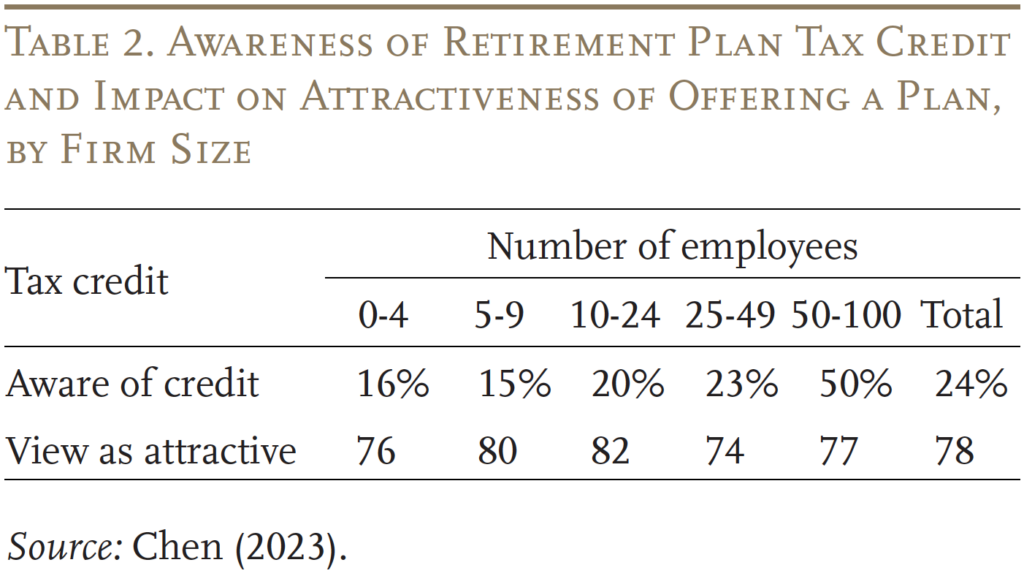
Not only do small firms overestimate the cost of offering a plan, but the vast majority – particularly those with fewer than 50 workers – are not aware that they can claim a tax credit of up to $5,000 for three years to help offset the costs of starting a plan. Interestingly, about 80 percent of employers say that such a credit would make offering a plan more attractive (see Table 2).
Additionally, small firms do not have a good sense of how much time it would take to administer a retirement plan. Most firms believe it would take several days to a whole week every month.3 But in reality, after the initial set-up, operating a retirement plan should only take a few hours a year. Overall, small businesses overestimate the burden in terms of the cost and complexity of introducing a retirement plan.
Employee Preferences and Workforce Characteristics
Small employers frequently report that workers prefer higher wages to retirement benefits. This perception reflects both workforce demographics and employer assumptions.4
Many small firms employ lower-wage, younger, part-time, or seasonal workers. Such employees may prioritize immediate consumption needs over long-term retirement savings. Participation rates in voluntary plans also tend to be lower among workers with limited earnings, reinforcing employer concerns that a plan would not be valued.5
Industries with lower rates of plan sponsorship – such as hospitality, retail, construction, and personal services – often rely on seasonal workers, have higher turnover, and have less stable employment relationships. In these environments, employers may view retirement benefits as a less necessary tool for recruitment and retention.
At the same time, employer perceptions may not fully capture employee preferences. Research consistently shows that workers are far more likely to save for retirement if they are automatically enrolled in a plan. Defaults and inertia play powerful roles in retirement saving behavior. Thus, even if workers initially prioritize wages, many ultimately participate once a plan is established.
Why Do Some Small Firms Offer Retirement Plans?
Despite the challenges – both real and perceived – about half of small employers do sponsor a retirement plan. Understanding why these firms offer coverage may reveal pathways for expanding access. A regression analysis of the 2023 Survey both confirms some of the patterns already discussed and reveals the importance of the owners’ perceptions about the role of retirement plans in recruitment and retention.
Firm Characteristics
Salary levels are one of the most predictive indicators: firms where the average employee makes more than $30,000 are much more likely to offer a plan. For firms that aren’t currently offering a plan, if average employee salaries are over $100,000 they are much more likely to report an intention to start one in the next two years. Echoing that pattern, firms providing professional, technical, and scientific services are more likely to offer a plan, while those in retail, hospitality, and food services are significantly less likely to do so – reflecting the average salary of workers in those industries.
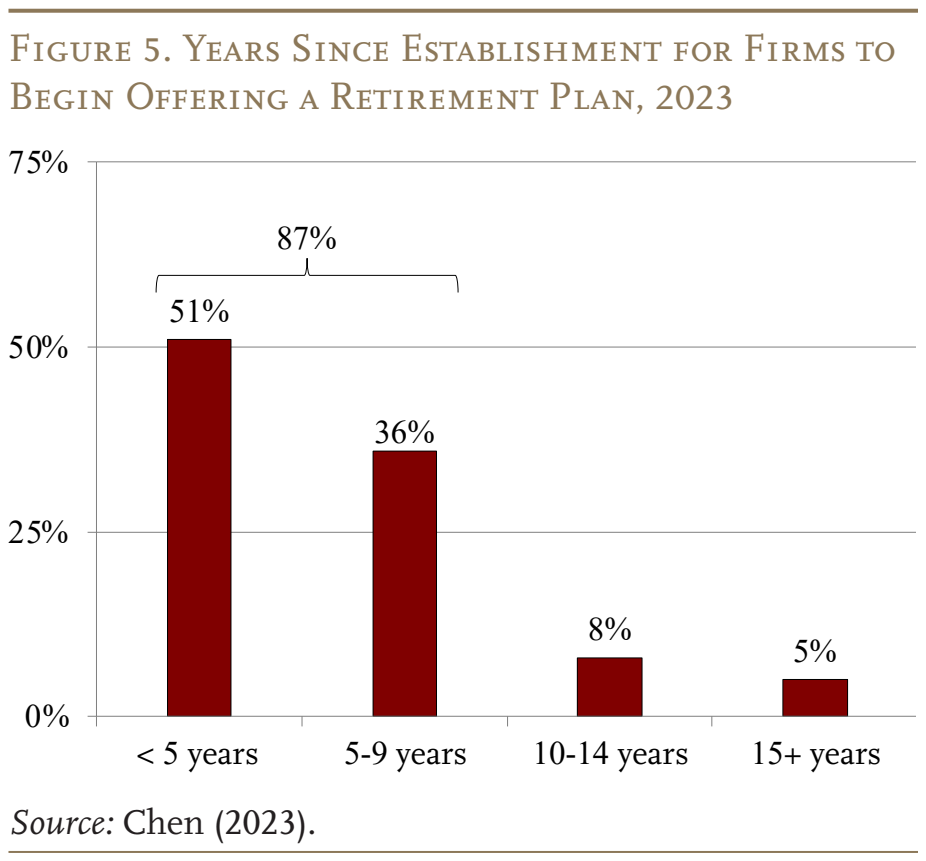
As already noted, firms with 50-99 employees are also more likely to offer a retirement plan than those with fewer employees. In addition, firms that offer plans tend to be more mature and financially stable. Among small businesses that offer a plan, only half begin offering it in the first five years of operation. However, by the 10th year in business, this number jumps to 87 percent (see Figure 5). This pattern is likely because, as firms mature and grow, they are more likely to formalize compensation and benefit structures. A business that initially operates informally may eventually adopt payroll systems, health insurance, and retirement plans as it expands.
Beyond the characteristics of the firm and its employees, however, the beliefs of the business owner are also important.
Recruitment and Retention
One of the strongest predictors of plan sponsorship is whether employers believe retirement benefits help attract and retain workers. Employers operate in competitive labor markets where benefits matter. Skilled workers often expect a robust benefits package, which includes a retirement plan. Small employers looking to hire skilled workers may need to offer retirement benefits to compete with larger employers. When labor markets are highly competitive, such as after the COVID pandemic, small employers are more likely to offer retirement benefits.
Notably, employer perceptions matter independently of firm characteristics. Two otherwise similar firms may make different decisions depending on whether the owner views retirement benefits as valuable for workforce management. Employers who see retirement plans merely as additional costs are less likely to adopt them. Employers who view plans as investments in workforce stability are more likely to offer coverage.
Implications for Expanding Coverage
Employers who have accurate information on the cost of retirement plans and who appreciate the usefulness of plans for recruitment and retention are more likely to consider offering a retirement plan. These findings point toward a potentially important role for education and support.
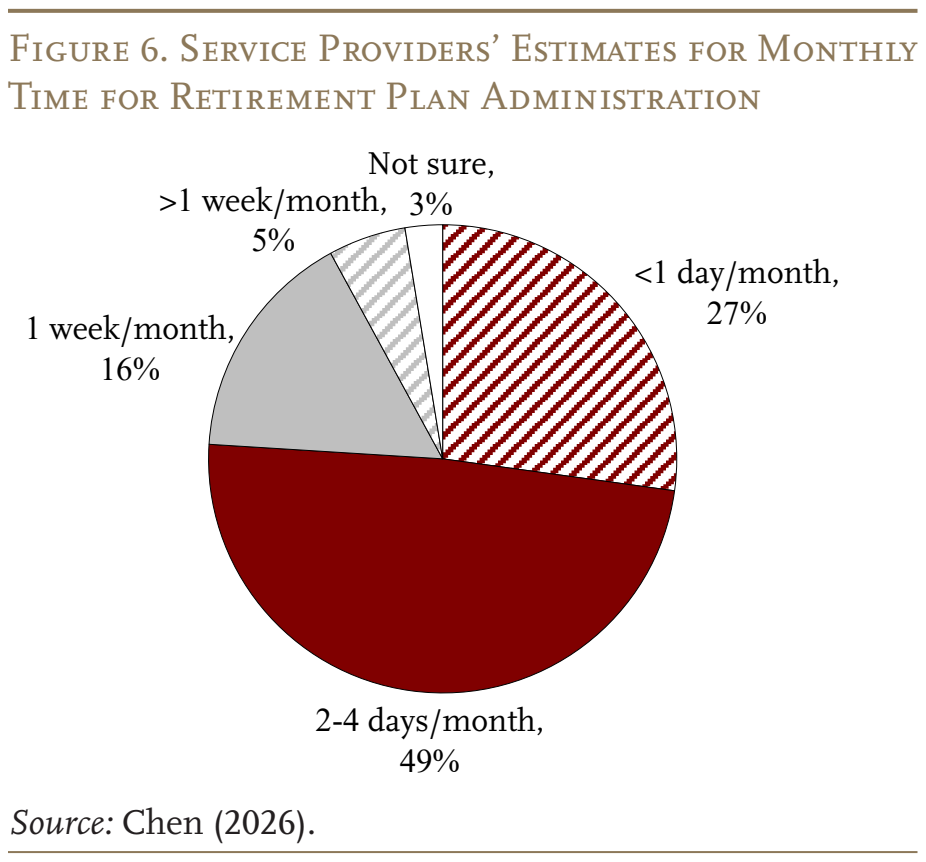
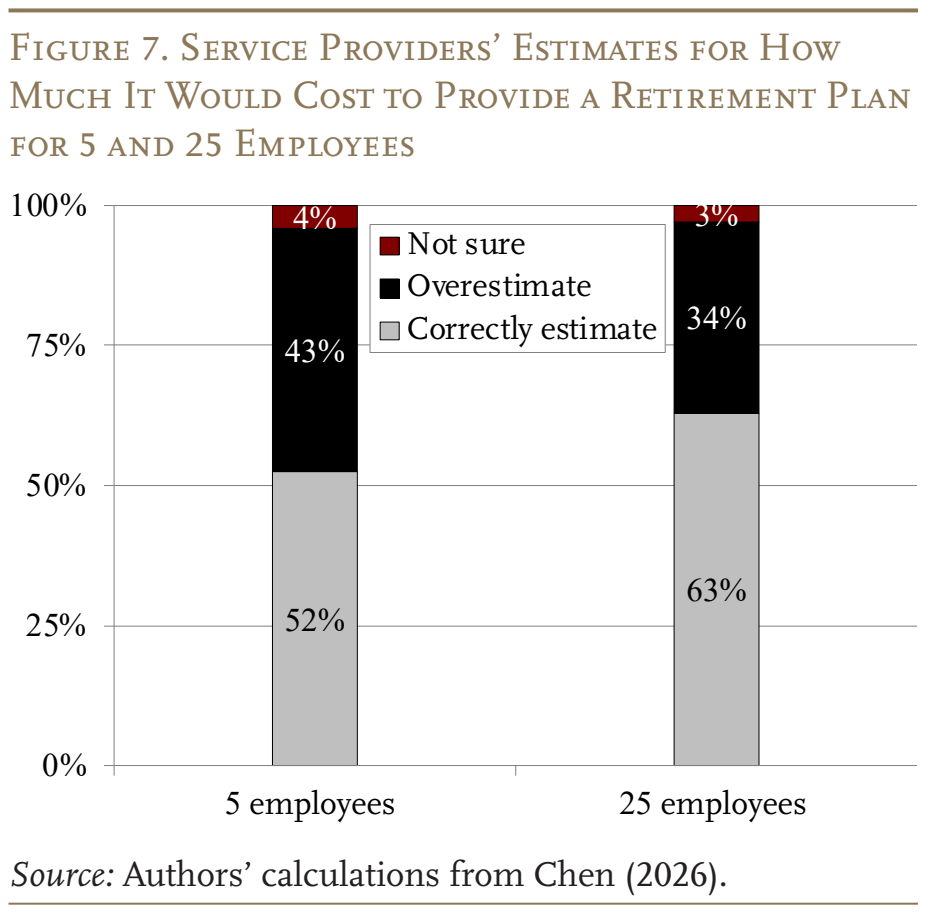
One source of help could be professional service providers, such as accountants, financial advisors, payroll providers, lawyers, and bankers, whom small businesses often trust and rely on when making financial and operational decisions. These providers could potentially help small business owners overcome barriers to plan adoption.6 The CRR’s 2025 Small Business Provider Survey, however, suggests both an important area for improvement and a formula for success. On the one hand, many professional service providers – particularly bankers and accountants – themselves overestimate the costs and administrative burdens associated with retirement plans. For example, about 20 percent of service providers believe that it would take at least one week per month to administer a retirement plan after initial set-up, and over one-third overestimate the costs (see Figures 6 and 7). Thus, service providers may unintentionally deter plan adoption through their own misperceptions of the burden of offering a plan.
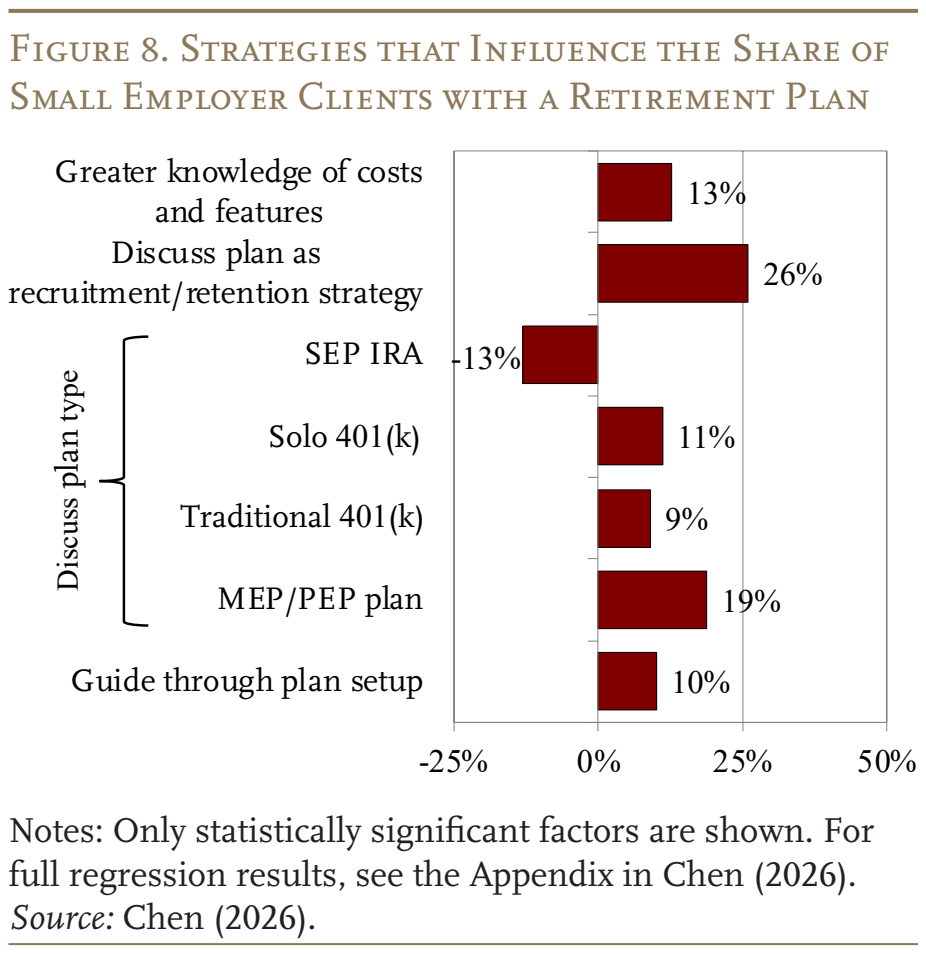
On the other hand, some providers have a high rate of plan sponsorship among their clients. This success can be traced to greater knowledge of the costs and features of retirement plans, a tendency to frame plans as tools for recruitment and retention, an emphasis on recommending some form of the familiar 401(k) plan, and a willingness to provide hands-on support to translate client interest into action (see Figure 8). In short, assistance from service providers can help get small businesses to adopt a retirement plan, but the track record to date is mixed.
Can Policy and Technology Help Increase Coverage?
For decades, policymakers have tried to solve the coverage problem by introducing simpler retirement programs that could be adopted by small businesses. These options, however, have had limited impact on coverage. The absence of significant federal action led the states to seize the initiative in the last 10 years by establishing state-based mandatory auto-IRA programs for workers whose employers do not offer a retirement plan. In 2019, the federal government re-entered the fray with an effort to expand coverage by making Multiple Employer Plans available to more firms in the SECURE 1.0 Act. Through the SECURE 2.0 Act – passed in 2022 – Congress expanded small business tax credits for plan adoption and introduced the “starter 401(k) plan” to, once again, lower the cost and administrative burden of offering a plan. Finally, technology-driven providers are also attempting to reshape the small-plan market.
Federal Plans for Small Businesses
While the federal government has experimented with several arrangements, the most well-established plans are the SEP and the SIMPLE IRA.
- SEP: The SEP (“Simplified Employee Pension”), enacted in 1978, allows employers to make tax-deductible contributions to an employee IRA (up to the lesser of 25 percent of salary or $72,000 per year). Unlike most employer-sponsored plans, employees are not eligible to make their own contributions to SEPs. Employers must make the same percentage contribution for all employees in a given year, but are not required to contribute every year. This plan may be attractive for self-employed workers or for small employers that are looking for a plan that is easy to administer.
- SIMPLE IRA: The SIMPLE IRA (“Savings Incentive Match Plan for Employees”), enacted in 1996, was designed to be a dramatically simplified 401(k)-type plan, holding assets in an IRA for each employee to spare the employer the responsibility of maintaining the assets in trust and overseeing the investment options. It avoids nondiscrimination testing and standards, lengthy plan documents, summary plan descriptions, and annual reporting to the government. The SIMPLE IRA is available only to employers with 100 or fewer employees and the self-employed, and firms can either match the employees’ contributions or contribute a fixed percentage of payroll without regard to whether employees contribute.
While the Treasury has also experimented with some other options – such as the Payroll Deduction IRA and the “myRA” – only the SIMPLE IRA has seemed to move the needle, and only to a limited degree. IRS tax statistics show that roughly 2.2 million taxpayers were contributing to SIMPLE IRAs and 3.5 million owned one.7
State Initiatives
In 2006, researchers at the Brookings Institution and the Heritage Foundation proposed a mandatory program that combined auto-enrollment with payroll-deduction IRAs. Specifically, employers that did not sponsor a plan would be required to auto-enroll their employees in private-sector IRAs invested in a target-date fund. Employees would be free to opt out at any time (like 401(k) auto-enrollment) or to choose a different contribution rate or investment. Employers would neither be required nor permitted to contribute.8 While the proposal initially generated a lot of interest and bipartisan support, no auto-IRA legislation has been enacted at the federal level.
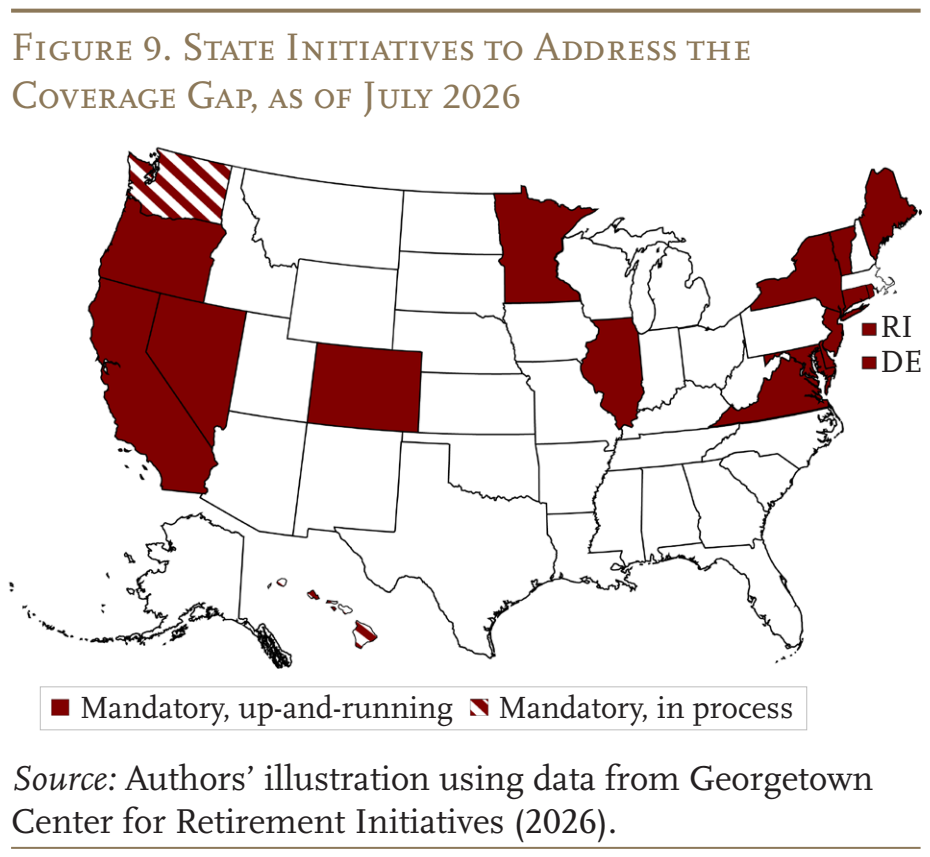
Instead, the states have taken the initiative with auto-IRAs. The early adopters were Oregon (2017), California (2018), and Illinois (2019), but as of mid-2026, 15 states have mandatory auto-IRA programs up and running, and Washington state and Hawaii are each setting one up (see Figure 9). At this point, the programs have accumulated more than $3 billion in more than 1.3 million funded accounts.9 The 1.3 million auto-IRA accounts after nine years compare favorably to the 3 million SIMPLE accounts after 30 years. While the accumulations are still modest, the amounts and accounts are growing every day, and more programs are coming online.
Moreover, the Saver’s Match – a refundable tax credit that was included in SECURE 2.0 and is slated to start in 2027 – should make the auto-IRAs more attractive and boost accumulations. Under this program, the federal government will provide eligible taxpayers a 50-percent match on the first $2,000 of contributions to a retirement account. Eligibility is based on household income.10 The new program is a big improvement over the existing Saver’s Credit, because: 1) the match is refundable instead of only being available to reduce a household’s tax liability; and 2) the enabling legislation also includes funds for the Treasury to increase public awareness about the program. This match will not only help the state auto-IRA programs but should provide an additional incentive for small businesses to offer a retirement plan.
One further note: the results of the 2023 Small Business Retirement Survey, described earlier, show that state-sponsored programs complement rather than substitute for the establishment of private plans. Among firms that already offer a plan, about 70 percent say that they would continue to offer a plan if their own state offered a mandate. Among firms that did not offer a plan, almost 60 percent said that a mandate would actually make offering their own retirement plan more attractive. Other studies have also concluded that state auto-IRAs complement the private market for retirement plans.11
Changes to Multiple Employer Plans
Another initiative to help small businesses, this time at the federal level, involves changes made to Multiple Employer Plans (MEPs) in the SECURE 1.0 Act. While MEPs have been around for decades, they represent less than 1 percent of total private-sector retirement plans, covering roughly 6 percent of active participants. Two main restrictions of MEPs may have limited their adoption: 1) employers had to share a common bond; and 2) the whole MEP could lose its tax-qualified status if one employer within the group was not in compliance (the “bad apple” rule).12
To increase participation, the 2019 legislation removed the “bad apple” restriction and created a new subclass of MEPs, called Pooled Employer Plans (PEPs), which are not limited to employers with a common bond. The removal of the bad apple and the common bond restrictions has generated a lot of excitement, particularly among financial services firms. Indeed, PEPs have several potential advantages over the existing options for small employers. PEPs can reduce the administrative burden, the fiduciary responsibility and – perhaps – the cost of offering a plan, while maintaining the ability to select the provider of choice and offer employer matches.13
Despite the enthusiasm, the initial uptake has been slow and has occurred mainly in the mid-sized employer market that already has a plan, rather than the small employer market that does not have a plan. Several factors could be at play:
- The vast majority of small employers have never heard of MEPs or PEPs.
- It may be hard to beat the cost of providing a single-employer plan, which has declined dramatically.
- The employer retains some fiduciary responsibilities with MEPs and PEPs, such as selecting the provider, monitoring the fees, and determining whether the services offered are beneficial.
- An employer that gets bigger and wants to convert to a more customizable single-employer 401(k) may find it difficult to terminate its portion of the PEP.
- PEPs can also make mergers and acquisitions more challenging.
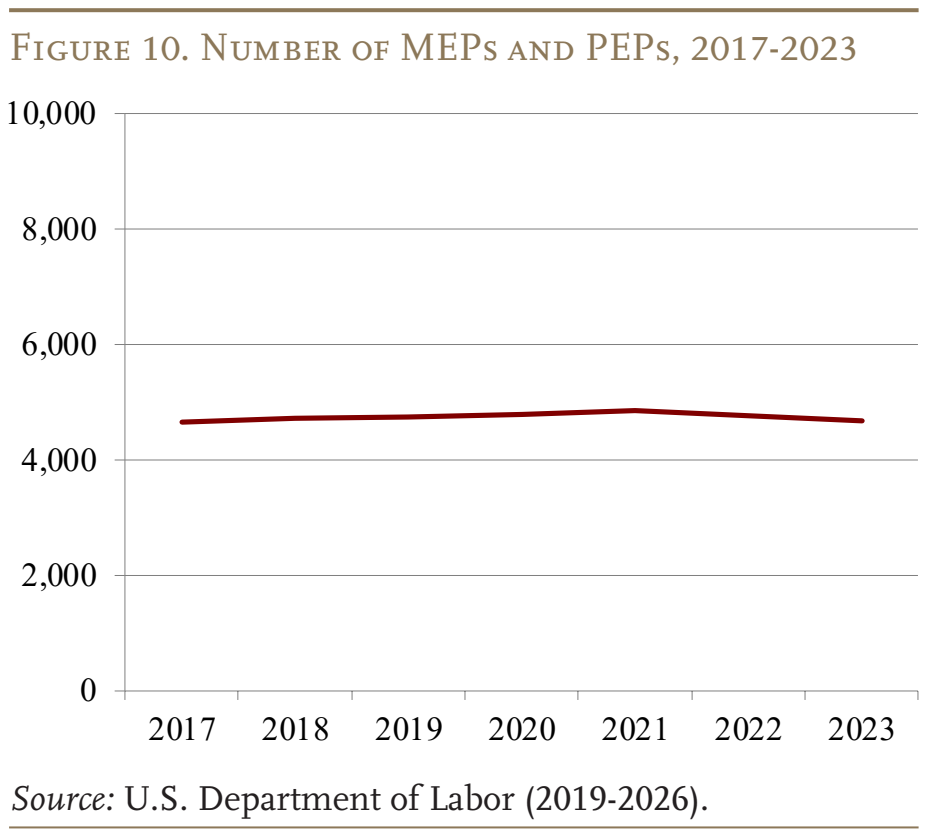
Data so far show limited growth in PEPs (see Figure 10). Research from Cerulli also suggests that the growth in PEPs is in takeover plans that are in the $1-5 million and $5-25 million plan segments, rather than in employers looking to offer a retirement plan for the first time.14
Potential of Fintech Solutions
Technology-driven providers are also reshaping the small-plan market. Traditionally, this market has been difficult to serve because start-up and administrative costs are high relative to account balances and contributions. Small employers often lack dedicated human resource staff, and owners may be reluctant to take on additional paperwork, fiduciary responsibility, or compliance obligations. Fintech firms seek to reduce these barriers through automation, simplified plan design, and lower-cost administration.
A growing number of fintech providers now offer digital retirement platforms specifically designed for small employers. These firms generally rely on cloud-based administration, integrated payroll systems, automated compliance testing, and streamlined onboarding. Many platforms can establish a retirement plan online within a matter of days and automatically handle enrollment, payroll deductions, employee communication, and required filings.
Fintech innovation may also reduce costs. Traditional small-business retirement plans often involve financial advisors, recordkeepers, and third-party administrators charging separate fees. Digital platforms can consolidate many of these functions. Some fintech firms charge flat monthly fees or low per-employee fees that may be easier for small employers to understand and budget.
At the same time, fintech retirement solutions are unlikely to eliminate the coverage gap on their own. These solutions often require employers to first have automated payroll. And many small employers remain unaware of available products or are uncertain about their own responsibilities.
Conclusion
The retirement coverage gap among small-business workers remains one of the central challenges in the U.S. retirement system.
Small employers face real barriers to plan sponsorship, including financial uncertainty and workforce characteristics that may reduce participation. Yet the research also makes clear that many barriers reflect misperceptions and information gaps rather than insurmountable economic realities. More specifically, many small employers overestimate the financial and administrative burdens associated with retirement plans and do not recognize the usefulness of retirement plans for recruitment and retention.
Importantly, about half of small firms already offer retirement plans. These firms tend to be larger, more stable, and more likely to view retirement benefits as tools for managing their workforce. Employers that understand the true costs of plans and receive practical implementation support are substantially more likely to adopt coverage. Trusted intermediaries, such as accountants, payroll providers, financial advisors, and bankers, could be helpful in this endeavor, although the evidence suggests they may need training to be effective.
Recent innovations provide reasons for cautious optimism. State mandatory auto-IRA programs have expanded access for many workers. PEPs seek to reduce scale disadvantages, but may be better for the mid-sized market than for small employers. Fintech providers are lowering barriers to entry for many providers. Still, the evidence suggests that expanding coverage will require more than new products. Employers need clear information, trusted guidance, and simple pathways to adoption.
To that end, more information is needed on several fronts, such as:
- Which information interventions (advisors, payroll firms, state programs) most effectively correct misperceptions?
- How does small-business plan adoption affect firm survival, employment growth, and worker turnover?
- How do actual fees and services in PEPs compare with fintech-enabled single-employer plans?
- Do fintech plans improve participant outcomes (participation, contribution rates, asset allocation), not just employer adoption?
References
Bloomfield, Adam, Lucas Goodman, Manita Rao, and Sita Slavov. 2025. “State Auto-IRA Policies and Firm Behavior: Lessons from Administrative Tax Data.” Journal of Public Economics 247: 105403.
Capital Group. 2025. “Capital Group Research Reveals Generational Divide Among Small Business Owners When It Comes to Retirement Plan Readiness.” Los Angeles, CA.
Cerulli. 2026. “PEPs and Participant Personalization Fuel Recordkeeper Growth.” Boston, MA.
Chen, Anqi. 2026. “Can Professional Service Providers Help Encourage Small Businesses to Offer Retirement Plans?” Special Report. Center for Retirement Research at Boston College.
Chen, Anqi. 2023. “Small Business Retirement Plans: The Importance of Employer Perceptions of Benefits and Costs.” Special Report. Center for Retirement Research at Boston College.
Chen, Anqi, and Alicia H. Munnell. 2024. “A Multiple Employer Plans Primer: Exploring Their Potential to Close the Coverage Gap.” Special Report. Center for Retirement Research at Boston College.
Chen, Anqi, and Alicia H. Munnell. 2022. “Why Do Some Small Businesses Offer Retirement Plans?” Special Report. Center for Retirement Research at Boston College.
Drobleyn, Eric. 2023. “How Much Time Does Annual 401(k) Administration Take?” Mobile, AL: Employee Fiduciary.
Employee Benefit Research Institute. Various years. Surveys of Small Employer Retirement Plan Sponsorship. Washington, DC.
Georgetown Center for Retirement Initiatives. 2026. Selected Data on State Auto-IRA Initiatives. Washington, DC.
Guzoto, Theron, Mark Hines, and Allison Shelton. 2022. “State Auto-IRAs Continue to Complement Private Market for Retirement Plans.” Washington, DC: Pew Charitable Trusts.
Internal Revenue Service. Statistics of Income, 2023. Washington, DC.
Pew Charitable Trusts. 2017. “Small Business Views on Retirement Savings Plans.” Issue Brief. Washington, DC.
U.S. Bureau of Labor Statistics. Business Employment Dynamics, 2025. Washington, DC.
U.S. Department of Labor. National Compensation Survey, 2024. Washington, DC.
U.S. Department of Labor. 2019-2026. Form 5500 Datasets for Plan Years 2017-2023. Washington, DC.
Vanguard. 2026. “How America Saves: 2026.” Malvern, PA.
Endnotes
- For example, a Guideline 401(k) can be as low as $708/year for 5 employees and $1,668/year for 25 employees. Similarly, Human Capital offers 401(k)s for $1,740/year and $2,940/year, respectively. One reason for the perceptions of high costs may be that small employers mistakenly assume that they have to provide safe-harbor plans, which require firms to provide a matching contribution that is immediately fully vested. However, common small employer retirement plans – such as starter 401(k)s, Simplified Employee Pensions (SEPs) or SIMPLE IRAs, and even Pooled Employer Plans (PEPs) – are not safe-harbor plans. See Chen (2026) for more details. ↩︎
- A 2025 Capital Group survey also found that perceived costs, beliefs that the business is too small, and lack of administrative resources are the top reasons small businesses do not offer a retirement plan. ↩︎
- Drobleyn (2023). ↩︎
- For more on retirement plan coverage and worker demographics, see Chen and Munnell (2022). ↩︎
- Vanguard (2026). ↩︎
- Capital Group (2025) found that among small business owners not currently offering a plan, 61 percent say they would turn to a financial advisor first for guidance. ↩︎
- Internal Revenue Service (2023). ↩︎
- Additionally, even though the proposal was expected to involve no out-of-pocket costs for employers, it was accompanied by a tax credit for small employers to defray administrative costs if there were any. ↩︎
- Data are from Georgetown Center for Research Initiatives (2026). ↩︎
- Single households below $20,500 will qualify for the full match, with the match phasing out at $35,500. For couples, the comparable numbers are $41,000 and $71,000. ↩︎
- A recent study, linking Form 5500 data and individual-level Census data, found that auto-IRA mandates increase the probability of firms offering a retirement plan by 3 percent and the probability that a worker participates in an employer plan by 33 percent (Bloomfield et al. 2025). A similar study by Guzoto, Hines, and Shelton (2022) also found that state auto-IRAs complement the private market for retirement plans. ↩︎
- For more details on MEPs and PEPs, see Chen and Munnell (2024). ↩︎
- Data on plan fees and who pays for them are extremely opaque. Even if fees are lower for the employer, the employee may still bear the cost of higher fees. See Pew (2017) for a detailed overview. ↩︎
- Cerulli (2026). ↩︎



Chen, Anqi and Alicia H. Munnell. 2026. "Small Business Retirement Plans: A Primer" Issue in Brief 26-16. Chestnut Hill, MA: Center for Retirement Research at Boston College.