


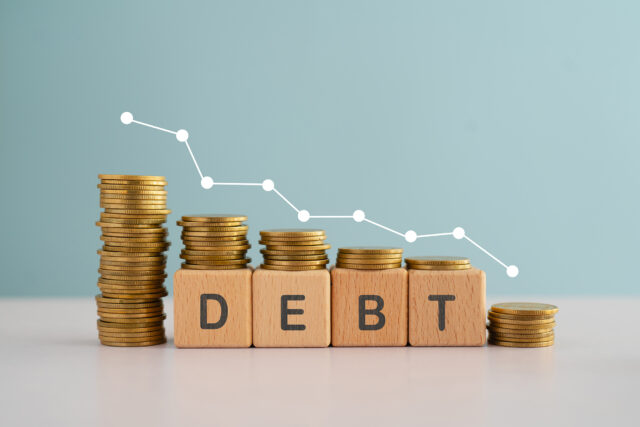
Time-Tested Strategies for Reducing Debt





Almost everyone struggles with debt at some point. In my early 20s, I learned some hard lessons about credit card debt. In my early 30s, I paid back graduate student loans that soaked up a huge share of my income. I came out intact both times, but I can relate to having a big debt load.
Recently, I’ve worked with several married couples who are approaching retirement and carrying significant debt. Amid the student loan crisis, I’ve seen parents carrying tens of thousands of dollars in loan debt for their kids.
Reducing debt is a critical piece of a sound financial plan, but it’s hard to know where to start. People often look for a magic bullet like debt consolidation, but that doesn’t make the problem go away. My approach is a practical framework of prioritization and consistency. Like most of financial planning, boring and reasonable go a long way.
Here are the key points of the approach.
Getting Started
The first step is to know where your money is going. Put your debts in one place – a spreadsheet or a piece of paper. How much remains, what’s the interest rate, when is the payoff scheduled? This task helps you prioritize.
While you need to make the minimum payment on all of your debts, the question is where to focus your efforts to pay down your debts. I generally recommend starting with the highest interest-rate debt first (known as the “avalanche” strategy), but some planners favor the “snowball” approach: pay off the smallest debt first for an easy win. If you list your debts in one place, you may see that a small victory is closer than you think.
Writing everything down also shows you when debts mature. Car loans typically run 4 to 7 years, so you may be closer to the end than you realize. If you’re close to paying off a car loan and struggling with debt, don’t buy another one. Freedom from car loans is one of life’s great pleasures!
Mortgages also have a maturity date, so even if it’s still 10 years out, you know your payments will decline considerably once the mortgage is gone.
Prioritize Credit Card Debt
Credit cards should almost always be the top priority. Average rates exceed 20 percent, meaning that a $10,000 balance can generate more than $2,000 a year in interest alone. Eliminating that debt is effectively a guaranteed 20-percent return, which no investment can reliably match.
If a client comes to me with credit card debt, it’s priority number one – ahead of retirement savings, investing, or paying down a mortgage early. If you have many credit cards, again focus on the highest-interest balances first (avalanche) or the smallest balances if motivation is a concern (snowball).
Finding the Money for Debt Reduction
To pay down your debts, you need to come up with the extra money by adding income or cutting costs.
Income from a side gig can go entirely toward debt reduction, and windfalls like tax refunds or bonuses are powerful when applied intentionally to balances.
Or you can try to cut costs. Consider modest changes like eating out less or dropping subscriptions, or bigger ones like downsizing a home. Downsizing may feel drastic, but it can reduce or eliminate a mortgage and lower maintenance costs. If possible, postpone major purchases until your debt is under control.
What About Debt Consolidation?
Consolidation gets pitched as a fresh start, and the ads make it sound like the answer to everything, but I’m generally skeptical. Rolling several debts into one loan or balance transfer doesn’t erase what you owe (though it could reduce your interest rate). It only repackages it and can have the negative effect of tempting people to keep spending on the cards they just “cleared.” If the underlying habits don’t change, you end up back where you started with a new loan stacked on the old balances. For credit card debt, treat consolidation as a last resort.
That said, consolidation can be valuable for student loans. Federal consolidation simplifies multiple servicers into one payment and may open the door to programs that can ease your repayment burden. Private refinancing can also make sense by lowering the interest rate. But moving federal loans into a private one means giving up federal offers such as Public Service Loan Forgiveness (PSLF), or an income-Driven Repayment (IDR) Plan. These federal programs can be valuable for those who qualify, so weigh the trade-offs carefully.
When Keeping Debt Makes Sense
Keeping debt under certain circumstances can be reasonable, even beneficial. Low-interest mortgages are the best example: a rate under 4 percent isn’t necessarily a priority to pay down early, even on a fixed retirement budget. It can be more valuable to keep assets invested and pay only the minimum, depending on your plan.
The distinction between good debt and bad debt is simple. Good debt is planned, affordable, and integrated into a broader financial plan. Bad debt erodes cash flow and creates stress.
The Bottom Line
To sum up, none of these suggestions for tackling debt require a dramatic gesture. No single move erases a balance overnight. What works is writing it down, attacking the highest-cost debt first, and staying consistent. That’s what planning is all about – being practical, consistent, and intentional.
Luke Delorme, CFP® is Director of Financial Planning at Tableaux Wealth in Great Barrington, MA (www.tableauxwealth.com), reachable at luke@tableauxwealth.com. To stay current on the Squared Away blog, join our free email list.
This blog post is for informational and educational purposes only and should not be considered financial advice. Consult a qualified professional for advice specific to your situation.




The decision the household faces isn’t only a consumption decision, it is also a decision about how to manage its balance sheet. Money to repay mortgages doesn’t come from the magic money tree. It comes from money that could otherwise be used to add to financial assets. Let’s apply Finance 101. Consider an individual with a $1m 3.5% 30 year mortgage that he is itemizing. He has $10m in tax deferred accounts. What is the optimal point on the efficient market frontier, assuming they choose an optimal stock/bond portfolio. You don’t need to get out Matlab to see it is $1m debt and $10m financial assets, not zero debt and $9m assets.